Anti-Corruption


Supporting the Sustainable Development Goals (SDGs)


Goals and Performance Highlights



Commitment, Challenge and Opportunity

The Company recognizes that corruption is a major issue that undermines transparency, credibility, and the trust of stakeholders, as well as posing an obstacle to sustainable economic and social development. Therefore, the Company is committed to conducting business with integrity, transparency, and accountability in all processes, while fostering an organizational culture rooted in ethics and moral principles among employees and management at all levels. This is to ensure that all personnel are aware of their roles, responsibilities, and moral obligations to perform their duties in full compliance with the law and ethical standards.
The Company also places great importance on building confidence among stakeholders, investors, suppliers, and alliances through fair and transparent practices. It strives to maintain organizational competitiveness alongside strengthening long-term economic and social stability. This commitment forms part of the Company’s pledge to operate with good corporate governance and in alignment with international principles of sound governance.


Strategies and Management Approaches


The Company places great importance on disseminating and raising awareness of its anti-corruption policies and measures among the Board of Directors, executives, supervisors, employees at all levels, as well as subsidiaries. This is carried out through both internal and external communication channels, such as email, internal communication groups (Group Line), and the information boards at the headquarters. These efforts aim to ensure that all personnel understand their roles and responsibilities in performing their duties with transparency and accountability.
The Company establishes a comprehensive Supplier Code of Conduct that thoroughly covers all types and elements of corruption, including bribery. This aligns with our stringent Due Diligence process for new business partners, ensuring that corruption risks are proactively addressed and managed across all business engagements.
All business partners and suppliers are required to formally acknowledge and sign their commitment to complying with the provisions set forth in this Code of Conduct. This mechanism ensures a mutual understanding of operational duties and promotes concrete, actionable risk management practices for anti-corruption throughout the supply chain.
In addition, the Company provides training and orientation for all new employees, along with communicating its anti-corruption policies and measures to all business partners to ensure understanding of principles and practices aligned with international standards. The Company has also established secure channels for receiving complaints and whistleblower reports, with strict measures to protect informants and maintain confidentiality.
1. Policy on Anti-Corruption
The Company is committed to conducting its business with integrity, transparency, and fairness, upholding the quality of its products and services as the primary basis for competition. The Company does not tolerate any form of corruption, including bribery, offering or accepting gifts or benefits intended to influence business advantages, soliciting unlawful benefits, or any actions that may lead to corruption. All personnel, as well as individuals involved in the Company’s business operations, are required to strictly comply with this policy to promote an organizational culture grounded in transparency and social responsibility.
The Company has also established detailed anti-corruption operational procedures to ensure strict adherence to this policy, and conduct ,regular reviews and follow-up to ensure consistency with changes in relevant business environment, while safeguarding the reputation and credibility of the organization.

2. Policy on the Offering or Acceptance of Gifts, Assets and Other Benefits
The Company conducts its business with integrity, in compliance with applicable law, and in accordance with the principles of good corporate governance. Recognizing the importance of maintaining its reputation, credibility, and the trust of all stakeholders, the Company has established clear policies on the receiving and giving of gifts, assets, or other benefits. Such actions must remain within appropriate boundaries, be consistent with generally accepted customs, traditions, or business etiquette, and must not violate any laws.
The Company requires that any giving or receiving of benefits must be transparent, auditable, must not influence decision-making in the performance of duties, and must not create conflicts of interest. In cases of uncertainty, employees must consult their supervisor or the corporate governance department before taking action, to ensure that all practices align with the Company’s ethical standards and principles of good governance.

3. Policy on Provision of Financial Support
The Company is committed to conducting business with transparency and social responsibility. Therefore, it has established strict procedures and criteria for granting financial sponsorships. Sponsorship activities must have clear and verifiable objectives, such as supporting social activities, environmental initiatives, or community development projects that align with the Company’s sustainability strategy.
All sponsorships must be approved by authorized personnel according to Company regulations, and all related documents must be properly recorded and retained to ensure transparency. Sponsorship funds must not be used for personal benefits or for activities that may pose risks to the Company’s reputation.

4. Policy on Charity Donation
The Company is committed to operating its business in transparent and socially responsible manner and strictly adhere to its Policy on Charity Donation. The Company has established systematic procedures and mechanisms for reviewing, approving, and monitoring donation activities to ensure that donated funds, materials, or resources are used for their intended purposes and are not misused.

5. Policy on Whistleblowing and Complaints
The Company emphasizes the importance of building a transparent and accountable organizational culture by establishing clear channels for whistleblowing and complaints. These channels cover issues related to illegal acts, corruption, or misconduct by employees and suppliers. The Company encourages employees and stakeholders to report information safely, with strict measures in place to protect whistleblowers and maintain confidentiality. All complaints will be investigated and handled in accordance with established procedures to ensure fairness for all parties involved.

6. Policy on Political Contributions
The Company conducts its business with political neutrality and respects democratic governance principles. It does not support political activities in any form, whether through monetary contributions, resources, or other means. All employees, executives, and stakeholders are required to strictly comply with this policy to prevent conflicts of interest and to maintain the Company’s political neutrality. In 2025, Supalai Public Company Limited made no monetary or in-kind political contributions, whether directly or indirectly. The total value of political contributions was THB 0.

7. Policy on Employment of Government Officers
The Company strictly adheres to its policy regarding the hiring of former government officials to prevent risks related to conflicts of interest and corruption. The selection of such individuals must follow appropriate criteria, and their previous positions or authority must not be used to secure undue advantage or benefit for the Company. All hiring processes must be transparent and auditable.

8. Policy on Conflict of Interest
The Company places great importance on the prevention and management of conflicts of interest. All personnel are required to report any current or potential conflicts of interest to ensure that business decisions and operations are not influenced by personal interests. The Company has defined clear criteria and guidelines to help personnel avoid situations that may lead to conflicts of interest and to uphold transparency and ethical business conduct.

The Company conducts systematic fraud risk assessments across all departments and subsidiaries by evaluating the likelihood and potential impact of each risk, and establishing appropriate preventive measures or mitigation measures. This assessment covers various factors, such as the nature of business activities, operating processes, industry conditions, and business environments.
The assessment is carried out in accordance with the Company’s anti-corruption policy and relevant operational guidelines, covering risks in areas such as gift giving, financial support, and political activities. Directors, executives, and employees at all levels are required to strictly comply with these guidelines. In addition, ongoing communication and training to build awareness of corruption risk prevention among employees.
Fraud Risk Management – 6 Step Process
1. Risk Identification
Relevant departments identify and record potential fraud risks arising from business operations, referencing the internal audit plan and the development of an Audit Checklist. The collected information is used for ongoing monitoring and follow-up.
2. Risk Assessment
The likelihood and impact of potential fraud risks are assessed, followed by the development of a risk management plan. The results are compared with the Company’s Risk Appetite before submission to the relevant committees for consideration.
3. Risk Mitigation
Strategies, measures, and activities are established to reduce or control risks to an acceptable level, ensuring alignment with governance policies and objectives.
4. Control Activities
Policies and measures are implemented, such as approvals, reviews, reconciliations, and segregation of duties, to ensure that risk management actions are appropriate, timely, and effectively executed.
5. Monitoring and Reporting
Risk management effectiveness is monitored and evaluated on a continuous basis. Information is collected and reported to the Audit Committee, the Risk Management Committee, and the Board of Directors at least once a year for consideration and improvement of risk control measures.
6. Communication
Risk management information and results are communicated to relevant parties—including Internal Audit, Risk Management, and Human Resources, to ensure understanding and full compliance with the established measures.

The Board of Directors plays a leading role in driving the Anti-Corruption Policy by acts as a role model for integrity, thereby building confidence and transparency among employees at all levels. The Company implements the following measures in a continuous and rigorous manner:
- The Chairman of the Board communicates and emphasizes the Company’s anti-corruption commitment to all stakeholder groups, demonstrating the organization’s dedication.
- Support is provided for online knowledge assessments related to anti-corruption measures, with awards given to employees who achieve the highest scores.
- Executives and supervisors are required to report corruption-related risk issues during project meetings and discussion forums to identify preventive measures.
- A centralized system is established to record and compile whistleblowing and complaint information, analyze case types and volumes, and summarize investigation results for regular reporting to the Audit Committee and the Board of Directors. This supports effective progress tracking and continuous policy enhancement.

The Company has established a systematic and transparent process for handling complaints, covering all steps from initial receipt through outcome follow-up, as follows:
- Complaints are received through designated Company’s channels to ensure that stakeholders can conveniently and safely report concerns.
- The Disciplinary Committee conducts a careful review the initial information to verify the fact of reported information.
- A detailed investigation is carried out to obtain complete and accurate information.
- Investigation results are summarized and communicated to the complainant to ensure transparency and trust in the process.
- Findings are reported to the Audit Committee and the Board of Directors to support decision-making and the design of appropriate corrective measures.
- Corrective actions and process enhancements are monitored to prevent recurrence and to improve management efficiency.
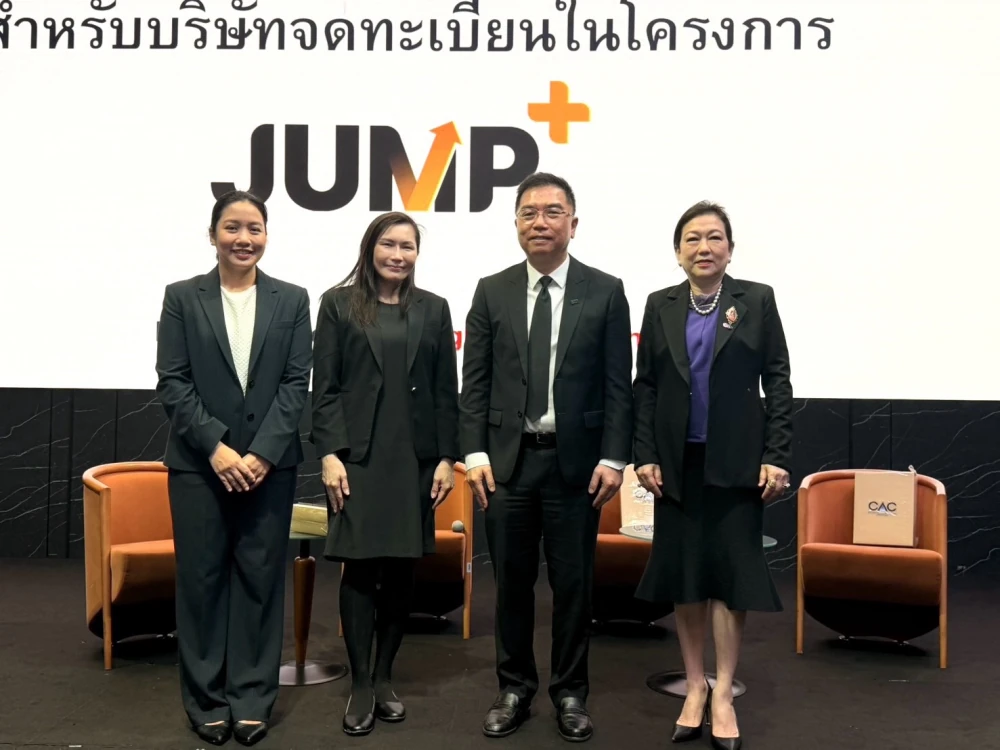
Through the commitment of the Chief Executive Officer and the Audit Committee, the Company has successfully renewed its certification under the Thai Private Sector Collective Action Against Corruption (CAC) and has been awarded the CAC Change Agent recognition for four consecutive years, reflecting its dedication to strengthening transparency and business integrity.
Summary of Performance Over the Past Four Years
| Year | Key Achievements |
|---|---|
| 2022 |
|
| 2023 |
|
| 2024 |
|
| 2025 |
|
Complaint Channels
| Complaint Channels | Details |
|---|---|
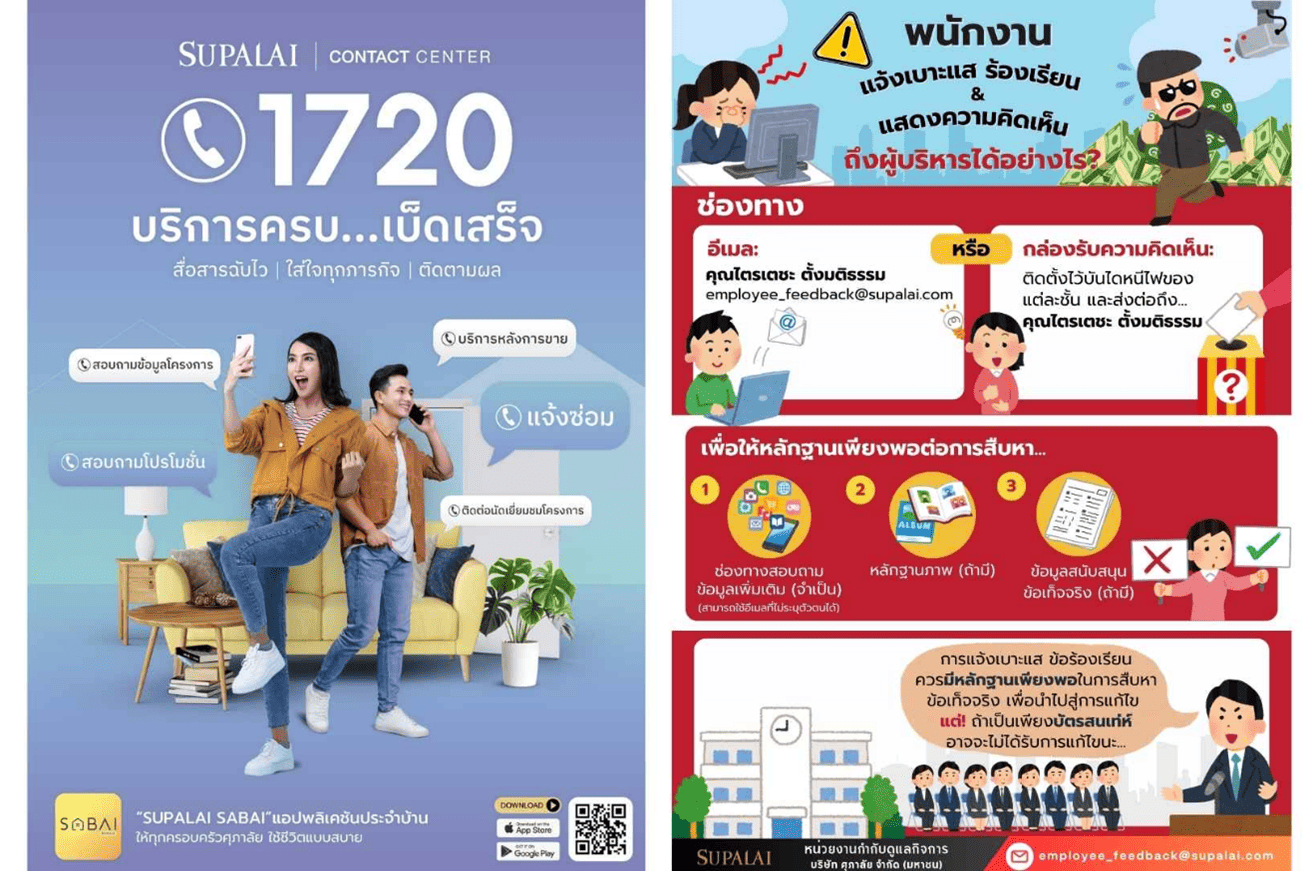
| anti-corruption@supalai.com Reports sent directly to the Independent Director | |
| Suggestion Box | Installed at the fire exit of each floor |
| Telephone | Extension 1720 |
| Direct Employee Complaint Submission | Send feedback/complaints directly to executives at employee_feedback@supalai.com |
Procedures for Handling Complaints on Corruption
| Complaint Handling Process | Details |
|---|---|
| 1. Acceptance of Matters | The informant provides details and submits the case to the coordinator, who records the information and forwards it to the relevant parties. |
| 2. Investigation | The Investigation Committee is appointed to conduct the investigation and summarize its results and then present it to the Audit Committee. |
| 3. Reporting Results | The Internal Audit Department summarizes details of complaints, investigations, and consideration results and presents them to the Audit Committee. The Audit Committee summarizes the consideration results and expresses opinions and reports to the Board of Directors. |
| 4. Reporting Results to Whistleblowers or Complainants | The consideration results are notified to the whistleblowers or complainants after reporting such investigation results to the Board of Directors. |
| 5. Monitoring and Reporting | In the case that the Audit Committee or the Board of Directors provides any suggestions or comments on the improvement of procedures for corruption prevention, the Internal Audit Department is responsible for monitoring and reporting the results of improvement and correction to the Audit Committee and the Board of Directors for acknowledgment. |
Whistleblower Protection Measures
The whistleblower protection measures are designed to safeguard the confidentiality and safety of individuals who report concerns, while preventing any harm or retaliation against them. The Company keeps all information strictly confidential and discloses it only when necessary. Those who are impacted will receive appropriate remedies. . Procedures are established to prevent all forms of retaliation or intimidation, including discrimination or termination resulting from whistleblowing. No disciplinary action will be taken against whistleblowers who report in good faith.
Anti-Corruption Awareness and Training
The Company provides training for employees at all levels, including executives and supervisors, to enhance their understanding of anti-corruption measures. This includes new employee orientation, internal communication through various channels, and ongoing activities to strengthen the organizational culture. In addition, the Company conducts annual knowledge assessments to maintain continuous awareness and compliance.
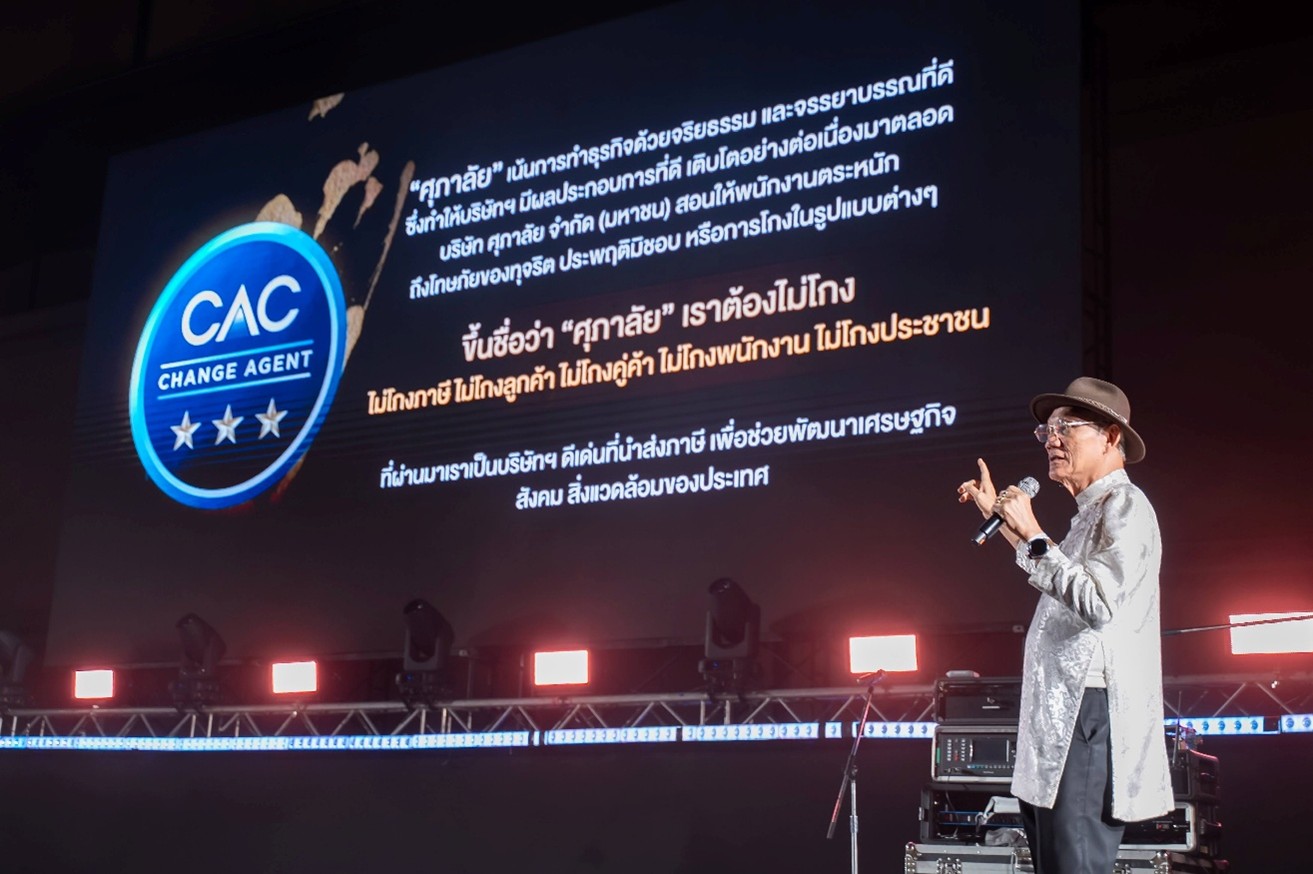

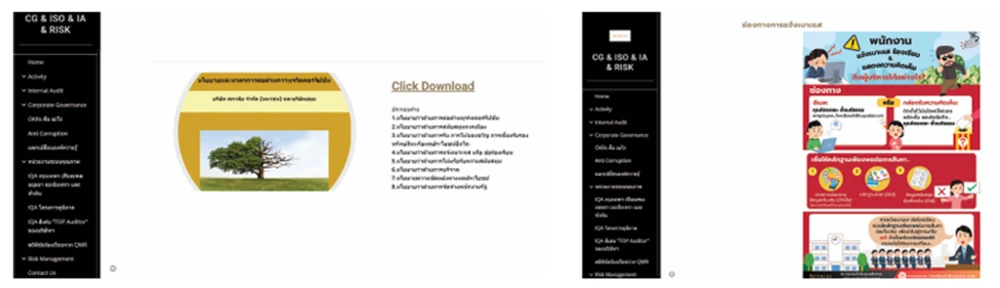
The Company communicates its anti-corruption measures to all stakeholder groups, including business partners, customers, shareholders, and suppliers, through its website, emails, and other publicity channels. Complaint channels are also provided to enable all parties to participate in preventing and monitoring corruption. The Company continues to uphold its policy of rejecting bribery and maintaining transparency in all operational processes.
Approach for Monitoring and Evaluating Compliance with Anti-Corruption Measures
The Company and the Audit Committee conduct monitoring and evaluation of the adequacy of the internal control system using the “Internal Control System Adequacy Assessment Form” provided by the Securities and Exchange Commission (SEC) and the Stock Exchange of Thailand (SET). The assessment is based on the COSO–ERM 2017 framework, covering five main categories, to ensure that anti-corruption control and prevention measures are effective and aligned with the Company’s organizational strategy. The following provides a brief overview of the details.
| Step | Details |
|---|---|
| 1. Control Environment | Establish the organizational structure, culture, and ethical standards to create an environment that supports effective control and risk prevention.. |
| 2. Risk Assessment | Identify, analyze, and assess risks that may impact organizational objectives, and prioritize them for management planning. |
| 3. Control Activities | Develop measures, procedures, and control processes to prevent or mitigate the assessed risks. |
| 4. Information & Communication | Provide accurate, timely, and comprehensive communication and reporting channels to support decision-making. |
| 5. Monitoring Activities | Continuously review and evaluate the effectiveness of the internal control system and make appropriate improvements. |
Steps to Operationalize Measures
| Step | Details |
|---|---|
| 1. Establish Policy | The Company has established a written anti-corruption policy covering directors, executives, supervisors, and all employees of the Company and its subsidiaries. |
| 2. Monitor and Evaluate | The Company assigns the Internal Audit Department to monitor compliance with anti-corruption measures, as well as to assess and improve them in alignment with policies and regulatory requirements. |
| 3. Improve Processes | Incorporate audit findings and recommendations from the Board and employees to improve work processes, close gaps, and reduce risks. |
| 4. Define Corrective Actions | Summarize improvement results and recommendations to establish future anti-corruption practices and policies. |
| 5. Report to the Board of Directors | The Internal Audit Department reports the results of monitoring and evaluations to the Board of Directors to further develop measures and internal control systems for maximum effectiveness. |
Follow-up and Monitoring
The Board of Directors is responsible for annually evaluating the appropriateness and effectiveness of the anti-corruption policy. This evaluation is based on operational results, recommendations, and reports from the Internal Audit Department. The findings are used to continuously improve and develop the policy to ensure it remains aligned with current circumstances and enhances overall effectiveness.
Reporting Channels, Actions Taken, and Corrective Measures
| Category | Details |
|---|---|
| Issue | An employee assigned to a project demanded that the project contractor under his/her supervision provide alcoholic beverages and meals as a form of benefit in return when the contractor received a progress payment from the Company. |
| Whistleblowing Channels | Anti-corruption@supalai.com |
| Action Taken |
|
| Corrective Measures For Recurrence Prevention |
|
Corrective Procedures to Prevent the Recurrence of Violations of the Code of Conduct
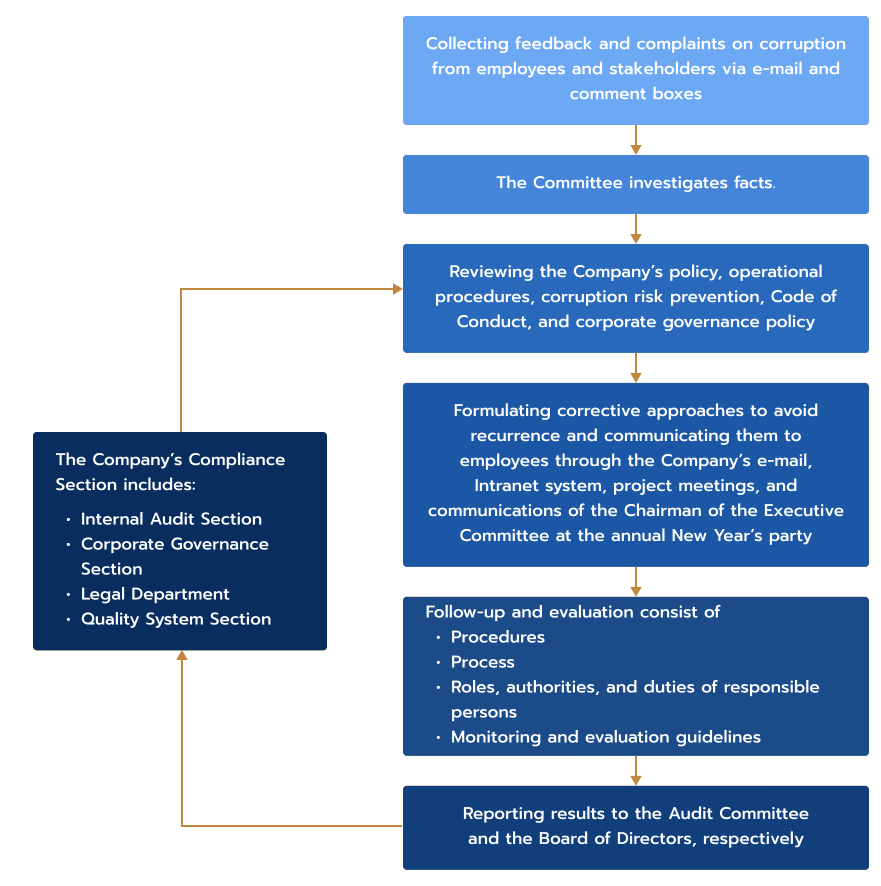
Anti-Corruption Adequacy and Completeness Review Process
The Company has established an anti-corruption policy that all directors, executives, supervisors, and employees at every level must strictly comply with. The Audit Committee is responsible for monitoring the adequacy and completeness of anti-corruption measures and conducting annual assessments of corruption risks, covering finance, accounting, and internal controls. The Company encourages all employees, including those in subsidiaries, to demonstrate a strong commitment to preventing corruption. Clear whistleblowing and complaint channels are provided, along with protective measures for whistleblowers, while promoting active participation in continuously improving anti-corruption practices. In addition, the Company conducts activities to build knowledge and understanding of relevant policies and practices through new employee orientation, communications via the corporate website, email, and internal activities. These efforts support the development of a transparent organizational culture grounded in good corporate governance.

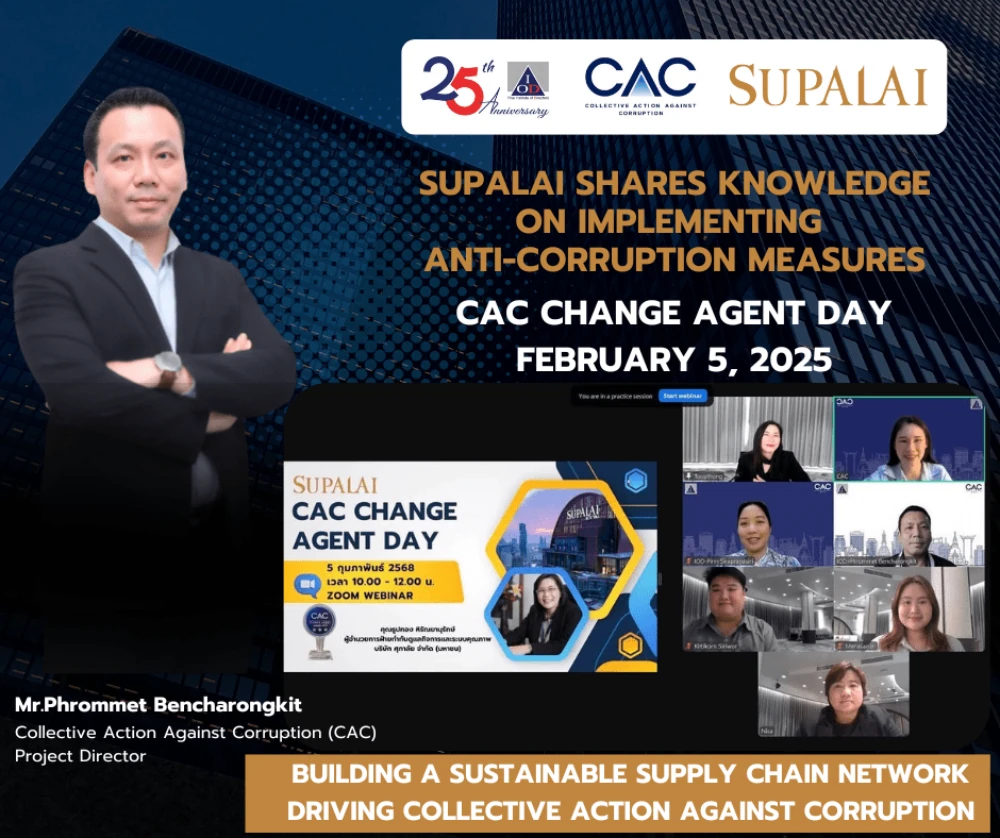
CAC Change Agent Project
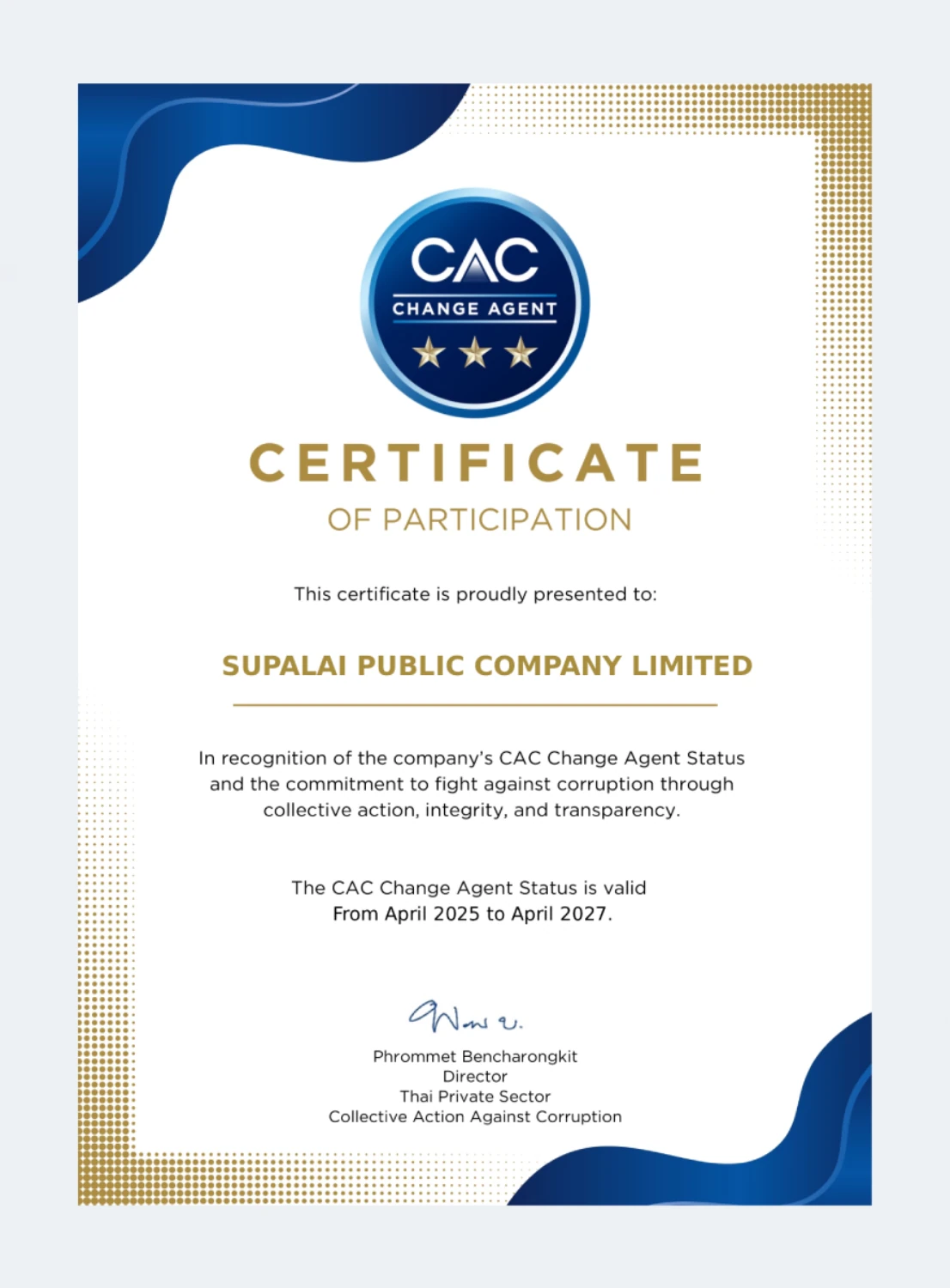
Supalai continues to promote a culture of integrity while strengthening its internal control systems. The Company also extends its ethical practices to its suppliers through workshops, advisory sessions, and long-term governance collaboration initiatives. This accomplishment reinforces Supalai’s dedication to sustainable growth founded upon honesty, accountability, and active participation in raising the standards of Thai businesses to remain free from corruption.
List of Certified SME Partners

Target

Performance



Stakeholders Directly Impacted

Employees
Positive Impacts
- Work in a transparent and corruption-free environment, have greater job security, and receive protection when reporting misconduct.
Expected Impacts / Risks
- May face pressure for refusing to participate in corrupt behavior or experience conflicts with individuals who do not comply with the Company’s standards

Suppliers / Retailer
Positive Impacts
- New business parters have undergone a comprehensive due diligence for new business partners, including bribery and corruption risk assessments across all dimensions.
- Able to conduct business with an organization that demonstrates strong corporate governance and credibility, reducing the risks associated with engaging with entities involved in corruption.
Expected Impacts / Risks
- Suppliers are required to conduct anti-corruption risk assessments and are subject to immediate contract termination if found engaged in acts of corruption.
- Required to comply with anti-corruption policies and guidelines, which may involve additional costs or adjustments to existing operational practices.

Shareholders / Investors
Positive Impacts
- Gain confidence in the Company’s transparency and business stability, increasing long-term growth opportunities and sustainable returns.
Expected Impacts / Risks
- In the event of corruption, the Company may face impacts on its stock value, reputation, and overall investor confidence.

Customers
Positive Impacts
- Confidence in the quality of products/services and in the Company’s transparent and ethical business practices.
Expected Impacts / Risks
- May experience indirect impacts if the organization faces legal issues or reputational damage resulting from corruption.

Government Agencies
Positive Impacts
- Recognize the Company’s cooperation and compliance with legal requirements, reducing risks related to regulatory enforcement.
Expected Impacts / Risks
- Non-compliance may lead to increased scrutiny, stricter inspections, or legal penalties.

Communities / Society
Positive Impacts
- Benefit from the organization’s transparent business practices, which contribute to a sustainable economy and society.
Expected Impacts / Risks
- In cases of corruption, the business’s local reputation and the community’s trust may be negatively affected.