Water and Wastewater Management


Supporting the Sustainable Development Goals (SDGs)


Goals and Performance Highlights


* Only water used in Supalai Grand Tower Rama 3 building
Commitment, Challenge and Opportunity
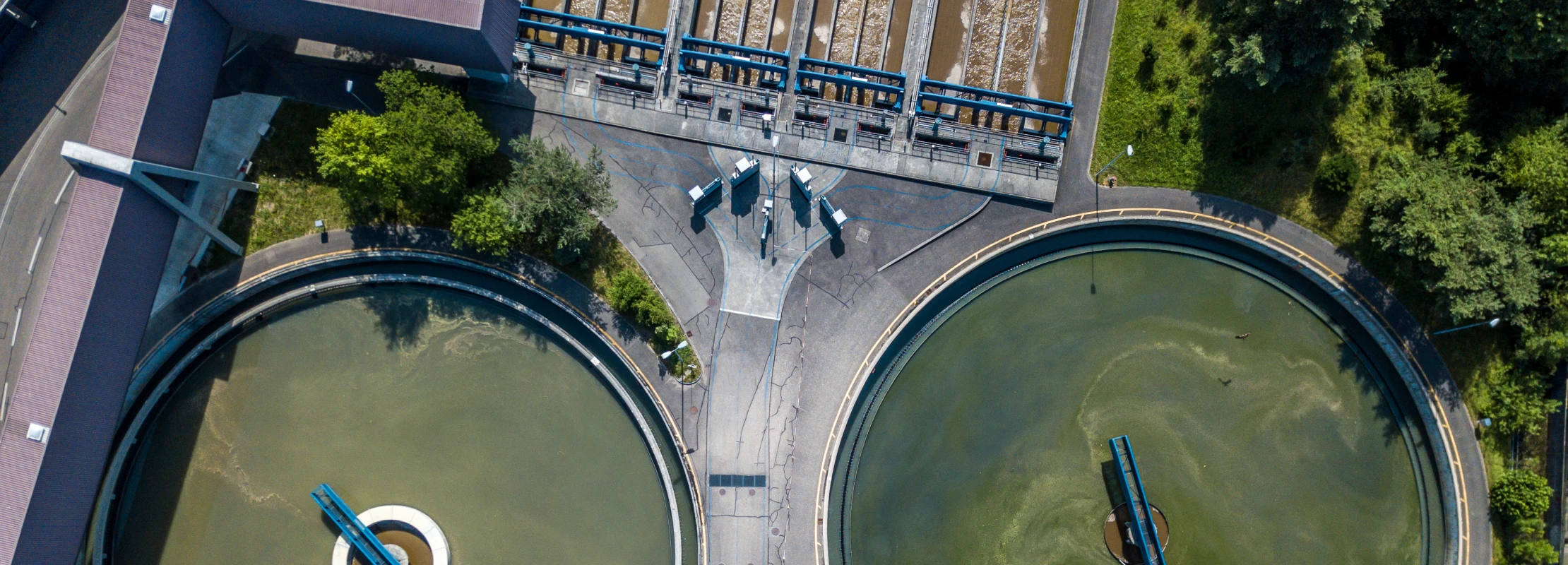
The Company has conducted a Double Materiality assessment of its water-related issues, considering both (1) the organization's impact on water resources and ecosystems (Impact Materiality) and (2) the financial risks and opportunities arising from water-related risks such as drought, flooding, water quality limitations, and regulatory changes (Financial Materiality), which may affect construction costs, business continuity, asset value, and stakeholder confidence.
The assessment results were integrated into the Enterprise Risk Management (ERM) process and long-term strategic planning to align with TCFD, IFRS S1/S2, and ESRS E3 Water and Marine Resources.
The company demonstrates a clear commitment to managing water usage and wastewater through a comprehensive environmental policy that encompasses various aspects of its business operations, particularly the wise and sustainable use of water. An example reflecting this commitment is the Supalai Grand Tower headquarters building. This initiative reuses condensed water from the air conditioning system, both in split-system units and for watering plants within the project area. This practice not only reduces water usage from natural sources but also serves as a model for resource management that considers long-term environmental impact.
However, despite the establishment of policies and pilot projects reflecting a commitment to water management, expanding these approaches to other company projects still faces limitations and challenges in several dimensions. These include technical aspects, budget, and the infrastructure of water systems in each project, which may vary depending on the characteristics of the buildings and residents. Furthermore, cultivating a culture of water conservation and promoting the reuse of wastewater remains a challenge, requiring continuous communication, stakeholder participation at the project level, and the development of effective tools and monitoring systems.
While challenging, these contexts also present opportunities for the company to enhance its water management practices, setting an example for the real estate sector. In particular, developing innovative water reuse, rainwater harvesting, and installing real-time water usage measurement systems can be expanded from pilot projects to cover more projects in the future. Furthermore, these initiatives are crucial in reinforcing the company's image as a leading real estate developer committed to sustainable development and meeting the needs of today's environmentally conscious consumers. These actions directly align with the United Nations' Sustainable Development Goals, especially SDG 6, which focuses on access to clean water, wastewater treatment, and integrated water management. Expanding collaboration with the government or external organizations to bring technology or funding to support water management at the project or community level will further empower the company to drive its environmental strategy towards true sustainability.
Governance Structure
The Company has established a Sustainability Working Group, comprising representatives from the Corporate Governance and Quality Systems Department, Construction Department, Building Management Department, and Human Resources Department. This group is responsible for assessing and analyzing water situation trends, evaluating risks related to water management, developing work plans and operational plans, and monitoring water-related performance efficiently and for maximum benefit, in alignment with organizational goals. It also procures water sources and expands areas for water reserves for the Company's use during normal and crisis situations, and communicates to raise awareness among employees about efficient water use. The group reports directly to the Chairman of the Sustainability Committee and submits performance reports to the Executive Committee annually.


Strategies and Management Approaches

Policy and Commitment
The Company is committed to caring for and protecting water resources throughout its supply chain, as well as reducing impacts and systematically managing water-related risks. This includes strict adherence to the wastewater discharge standards of the Pollution Control Department and guidelines of ISO 14001:2015 environmental standards, and transparent disclosure of water and effluent sustainability reports GRI 303: Water and Effluents according to international GRI Standards (Global Reporting Initiative). Furthermore, in some of the Company's areas, which are high water-stress areas, the Company has conducted water resource risk assessments using the internationally recognized Aqueduct Water Risk Atlas tool from the World Resources Institute (WRI). Measures for water risk management have been defined, such as reducing water consumption (Reduce), treating wastewater to meet standards or for reuse and recycling water for new use, as well as supporting equitable access to water sources with communities. The Company has verified and established a resource and waste management policy, with water management plans to reduce water consumption and improve water use efficiency for maximum benefit. It also promotes awareness among employees and communities around projects about the importance of and adherence to environmental policies and practices to foster environmental sustainability.
The Company recognizes that clean water and sanitation are fundamental human rights in accordance with the UN Guiding Principles on Business and Human Rights (UNGP) and relevant ILO standards. Therefore, the Company has established measures to prevent business operations from affecting the access to water for surrounding communities, and has implemented a transparent, accessible, and effective Grievance Mechanism for issues related to water quality and usage.
The company has a long-term goal: that the developed projects will have water quality checked and be 100% reusable by 2030.
For more information, please visit:
Policy on Resource and Waste Management

Strategies and Management Approaches
The Company conducts basin-level risk assessments for project areas located in Water Stress areas, using the Aqueduct Water Risk Atlas tool and climate scenario data SSP2-4.5 to assess physical risk and transition risk. The assessment results are used to define risk reduction measures, project design, and allocation of backup water sources, in line with the TNFD framework (LEAP Approaches: Locate, Evaluate, Assess, Prepare )
From the assessment of all projects within the Company's operational areas, it was found that risks are concentrated in economically strategic regions, namely the Central region, with over 41 projects facing extremely high water stress risks. In the Eastern region, most projects fall into the high-risk category, totaling 23 projects, due to the area's sensitivity to uncertain rainfall and competition for water resources between industrial and agricultural sectors. Therefore, the organization prioritizes increasing water use efficiency and water recycling to reduce the burden of drawing water from natural sources. In the Northern and Northeastern regions, although the overall risk level is distributed, major provinces such as Chiang Mai, Khon Kaen, and Nakhon Ratchasima still have projects in the extremely high-risk group, necessitating systematic backup water management plans during the dry season. Conversely, the Southern and Western regions generally maintain low to moderate risk levels, indicating relatively high water resource security. Nevertheless, the organization continues to adhere to water-saving practices to prevent potential risks arising from future climate change conditions.
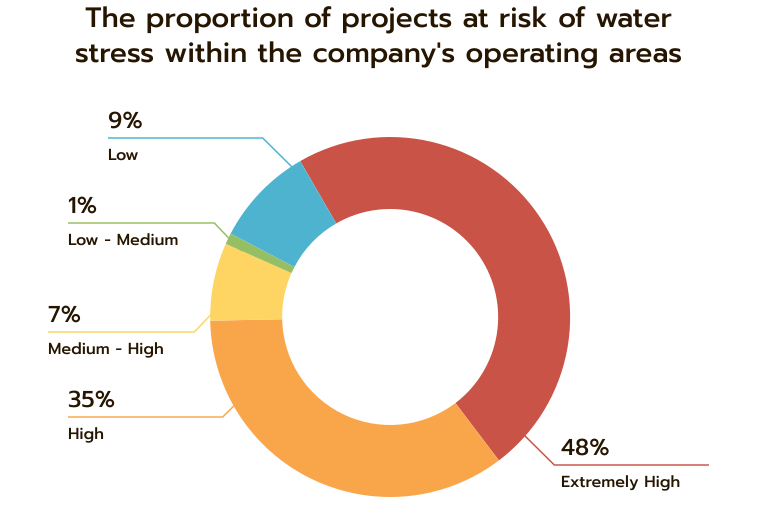
The Company has established short-term and long-term operational plans to reduce water consumption and to mitigate potential impacts from climate change. The operational plans are as follows:
- Establish processes to identify opportunities for reducing water consumption without impacting construction processes and surrounding communities.
- Monitor and develop new technologies and innovations to enhance water use efficiency.
- Regularly review and evaluate water conservation areas.
Furthermore, the Company has enhanced water use efficiency in its production processes by recycling water through projects to improve water systems within construction sites, such as wastewater quality monitoring projects and the excavation of retention ponds to collect rainwater for use during droughts.
Drought and Water Scarcity Preparedness: The Company manages water by monitoring situations, planning and implementing various measures, and managing water crises. There are two key approaches to water management, which are expected to reduce water consumption costs through water reduction plans and ensure sufficient water for production processes.
Water Management Task Force
The Company evaluates the entire production process to identify opportunities for reducing water consumption without affecting construction quality. It applies technology and innovation to enhance production efficiency, reduce water usage, and recycle water within construction sites to ensure sufficient water for business operations. Additionally, the Company regularly reviews its operations and develops new knowledge to continuously improve its water conservation capabilities.
The Company systematically monitors water situations, including both internal and external factors, continuously assessing potential risks and impacts such as relevant regulations, water quantity, water quality, and national and local water policies. It also collaborates closely with government agencies, local authorities, and stakeholders in managing water demand and supply to promote sustainable water resource management throughout the supply chain. Furthermore, the Company has expanded its water risk assessment to the supply chain, evaluating contractors and key material suppliers, especially in Water Stress Areas, to prevent risks of construction material disruptions. It also establishes guidelines for efficient water use for key partners and transparently and regularly communicates its water management performance and progress to stakeholders.
Stakeholders Directly Impacted

Customers
Positive Impacts
- Reside in projects with safe water management systems, clean water quality, and reduced water costs through water-saving systems.
Expected Impacts / Risks
- If the water management system malfunctions or does not meet standards, it may result in water quality unsuitable for consumption and cause dissatisfaction among residents.

Employees
Positive Impacts
- Work in an environment that values environmental care and hygiene, fostering a sense of pride in the organization.
Expected Impacts / Risks
- If training and supporting measures are lacking, there may be increased workload or risks from exposure to contaminated wastewater.

Suppliers / Retailers
Positive Impacts
- Have opportunities to develop innovations with SUPALAI, such as water-saving technologies or advanced treatment systems, creating credibility and business opportunities.
Expected Impacts / Risks
- If the Company’s environmental standards become stricter, suppliers may face higher costs to comply with the requirements.

Shareholders / Investors
Positive Impacts
- Benefit from the Company’s positive image and sustainability, which help enhance investor confidence and long-term investment value.
Expected Impacts / Risks
- If water management does not meet standards, it may create legal and reputational risks and affect investment returns.

Community / Society
Positive Impacts
- Enjoy an improved environment, reduced impacts from wastewater, and access to projects that are socially responsible.
Expected Impacts / Risks
- If leaks occur or untreated wastewater is improperly discharged, it may impact health, the environment, and relationships with the community.

Government Agencies
Positive Impacts
- Receive cooperation from private organizations in supporting environmental policies and water resource conservation.
Expected Impacts / Risks
- If the Company fails to comply with water and wastewater regulations, it may affect law enforcement and create legal issues for the Company.
Performance Results
In 2025, the company received no complaints from the community or government agencies regarding wastewater or causing nuisance to the community and environment.
Water Security
Water Security
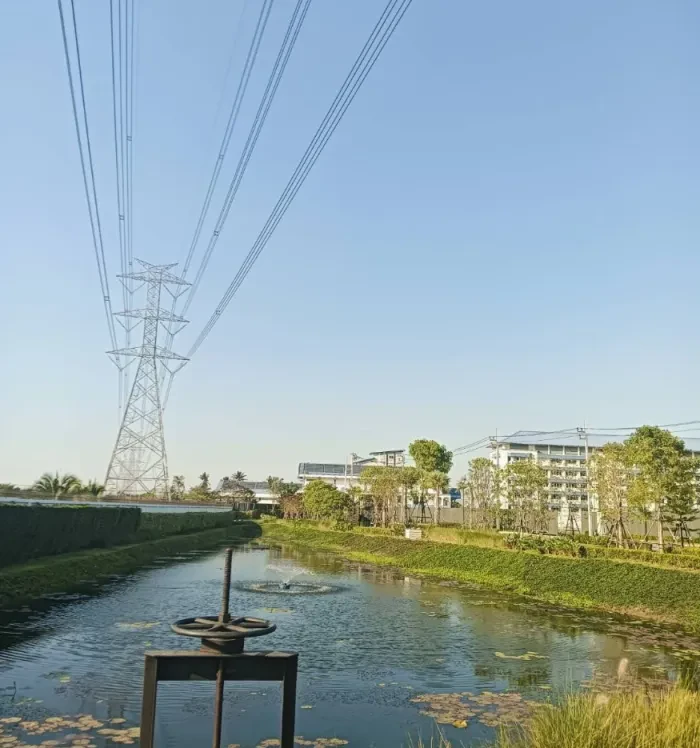
The company recognizes the significant water usage in construction processes, which poses a risk of water scarcity if climate conditions change severely. Therefore, it has established backup water sources within the company's area to ensure operations do not rely on external water sources. A retention pond has been constructed to temporarily store large volumes of rainwater during heavy rainfall, slowing down water flow to prevent simultaneous discharge into public drainage systems beyond their capacity. This helps prevent flash floods in the project area and reduces impacts on adjacent areas, as well as storing water for use during the dry season.
Engagement with Stakeholder of Water-Stressed Areas
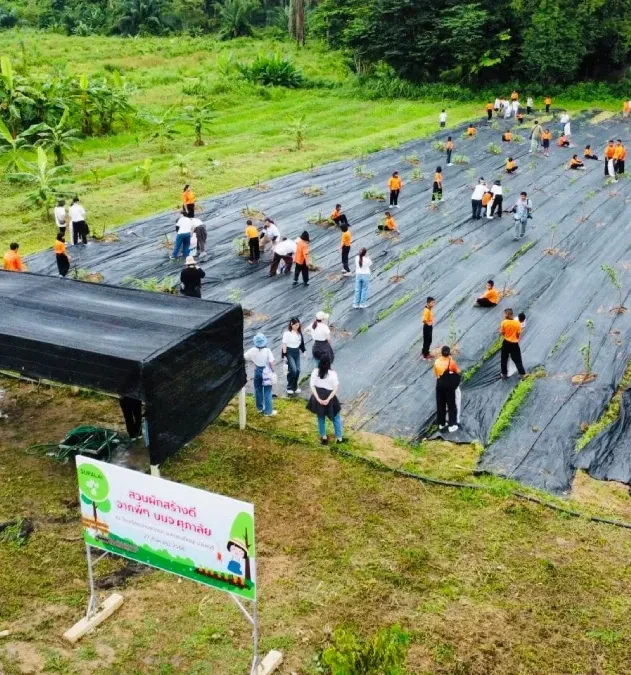
The company recognizes the importance of water resource management in collaboration with stakeholders, community groups, and schools, especially in Chonburi province, where allocated projects under the management of affiliated legal entities are located. This area experiences water stress and has physical limitations due to being a brackish water area, which negatively impacts agriculture as water salinity is a significant problem preventing most horticultural crops from growing normally. Therefore, the company initiated a collaborative approaches with stakeholders, including surrounding communities and educational institutions, to integrate resource utilization efficiently and reduce the rate of water extraction from public sources. This is carried out through the "Suanphak Srang Dee Project" which applies hydroponics agricultural innovation to the area. This system is a closed-loop plant cultivation process that facilitates the recycling of water resources and nutrient solutions, resulting in a reduction of water usage by up to 90%* compared to traditional soil-based agriculture.
The achievements from project implementation not only involve managing water resource risks with the community but also enhance the quality of life for community members through promoting food security. This reflects the company's commitment to driving the organization according to the principles of maximizing resource utilization and fostering sustainable growth alongside the community.
(*Reference data from Service Center, Thailand Department of Agricultural Extension)
Reducing Water Usage and Loss in the Organization
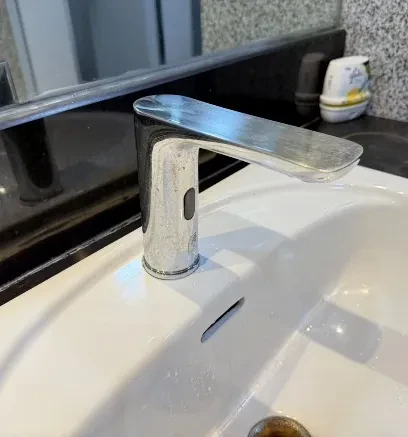
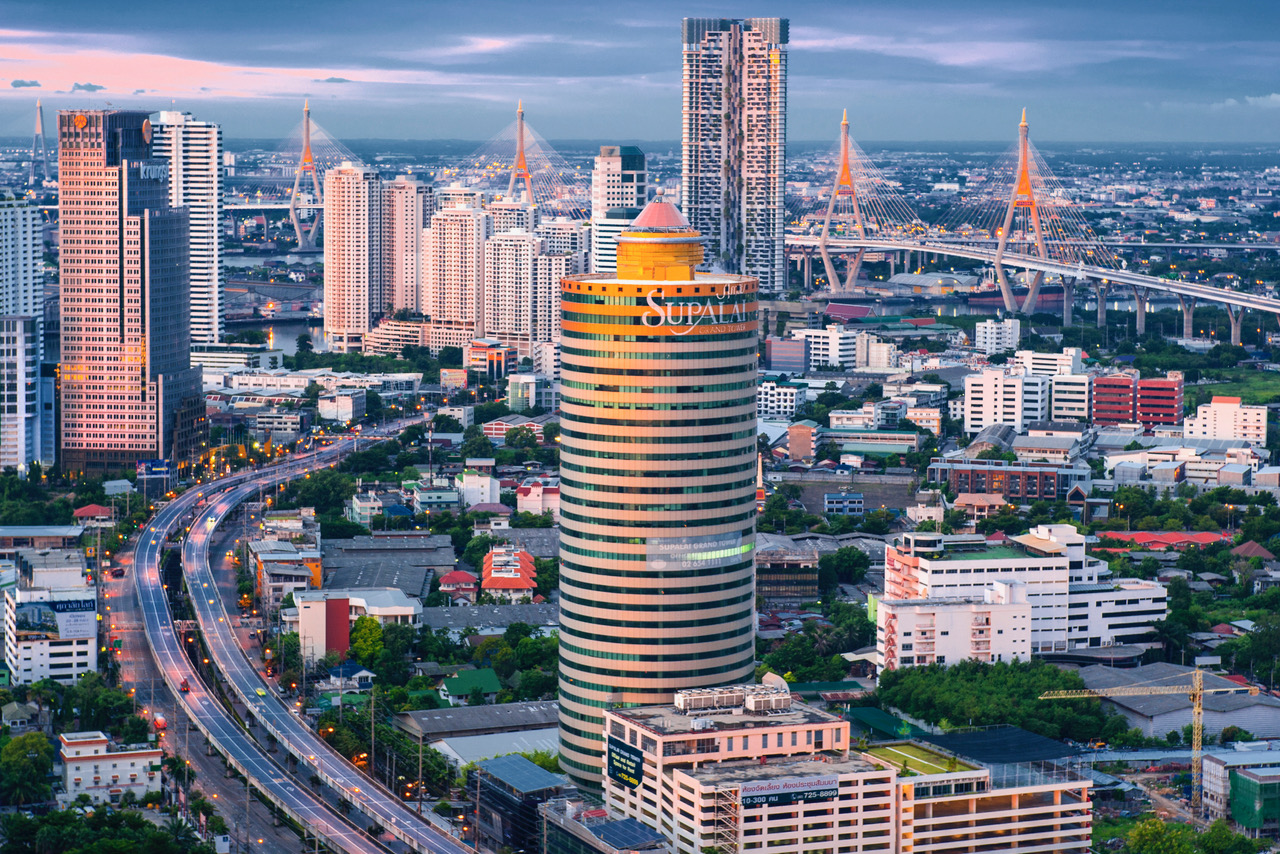
Water Resource Management at Supalai Grand Tower
The company aims to reduce water consumption at Supalai Grand Tower and has developed a water management plan to reduce water usage, improve water efficiency, and encourage all employees to participate in water resource conservation and efficient water use in all activities. The building management team controls and monitors the progress of various project activities as follows:
- The project involves collecting wastewater from the Chiller system, which is still of suitable quality, for reuse in watering plants and maintaining green areas. This helps reduce tap water consumption, increases resource efficiency, and supports sustainable water resource conservation.
- Improving water efficiency of equipment and sanitary ware. The company selects water-saving sanitary ware and installs sensor-activated faucets to reduce excessive water usage. This helps control water consumption efficiently and reduces water loss.
- Inspection and repair of water leaks in equipment and piping systems. The company regularly inspects equipment and piping systems weekly and encourages all employees to participate in monitoring and reporting repairs for immediate action if any water leaks are observed within the company, such as dripping faucets or sanitary ware in restrooms.
- Educating and raising awareness among employees about water usage and conservation in all offices. Campaign signs are created and publicized to remind employees to turn off water whenever not in use and to regularly check for water leaks to reduce unnecessary water loss.
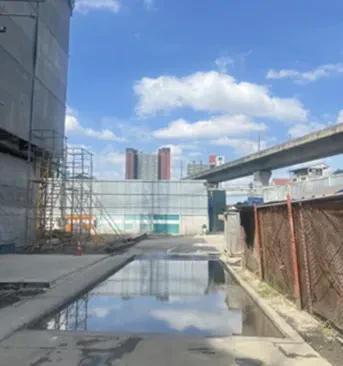
Water Recycling in Construction Projects (Water Reuse)
Maintaining the cleanliness of public roads is crucial. All trucks leaving the project must undergo wheel washing to prevent soil debris or dust from spreading outside. Without proper management, this process can lead to significant water wastage from road cleaning and accumulate wastewater in construction projects. Therefore, a wheel wash pond with a preliminary treatment system has been designed within the project. This system allows soil particles to settle and separates debris, after which the settled water is recycled for washing subsequent truck wheels, instead of using tap water and discharging it as wastewater. This method significantly reduces new water consumption. Furthermore, the settled soil is managed beneficially; soil debris and sediment separated from the recycled water pond are collected for management with other waste materials in the project, such as mixing with concrete scraps to form a road. subbase or for site improvement
Effluent Discharge Management
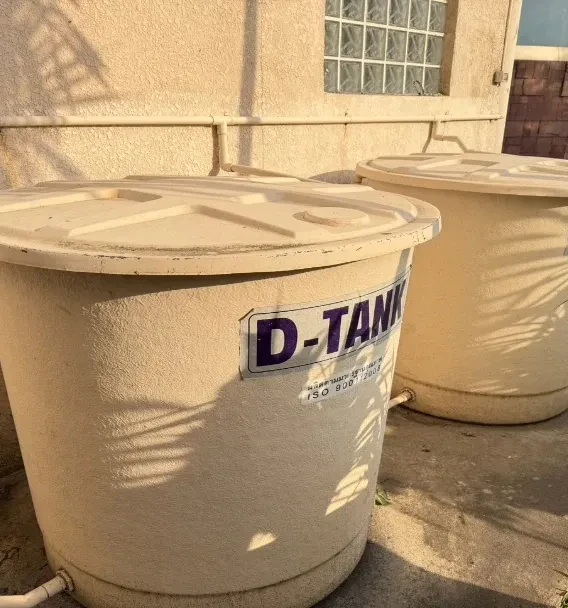
Wastewater Management and Recycling
The company recognizes environmental and community risks, thus it has developed a water management plan and implements wastewater management from organizational consumption, including all construction processes, to properly and efficiently manage wastewater as follows:
Wastewater Treatment
The company has established a drainage system from all areas generating wastewater within the company. The installation of an efficient wastewater treatment system helps reduce pollutant discharge into public water sources, prevents water and soil contamination, reduces impacts on ecosystems and surrounding communities, and promotes responsible water resource management.
- Supalai Grand Tower uses both aerobic and anaerobic wastewater treatment systems to achieve maximum efficiency in wastewater treatment. All 5 cubic meters per day of treated water (100%) is sent to a treated water reservoir for reuse in production processes and for watering green areas, with no discharge into public water sources, adhering to the principle of Zero Water Discharge.
- Construction projects have a management plan and wastewater treatment process starting from households. Wastewater undergoes preliminary treatment in individual household septic tanks. The treated water then flows to the project's central wastewater treatment plant for further treatment and quality control to meet standards before being discharged into public water sources.
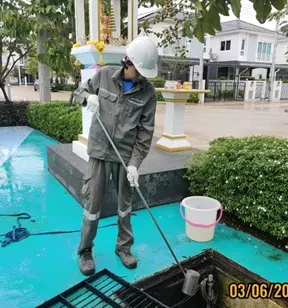
Water Quality Control Discharge
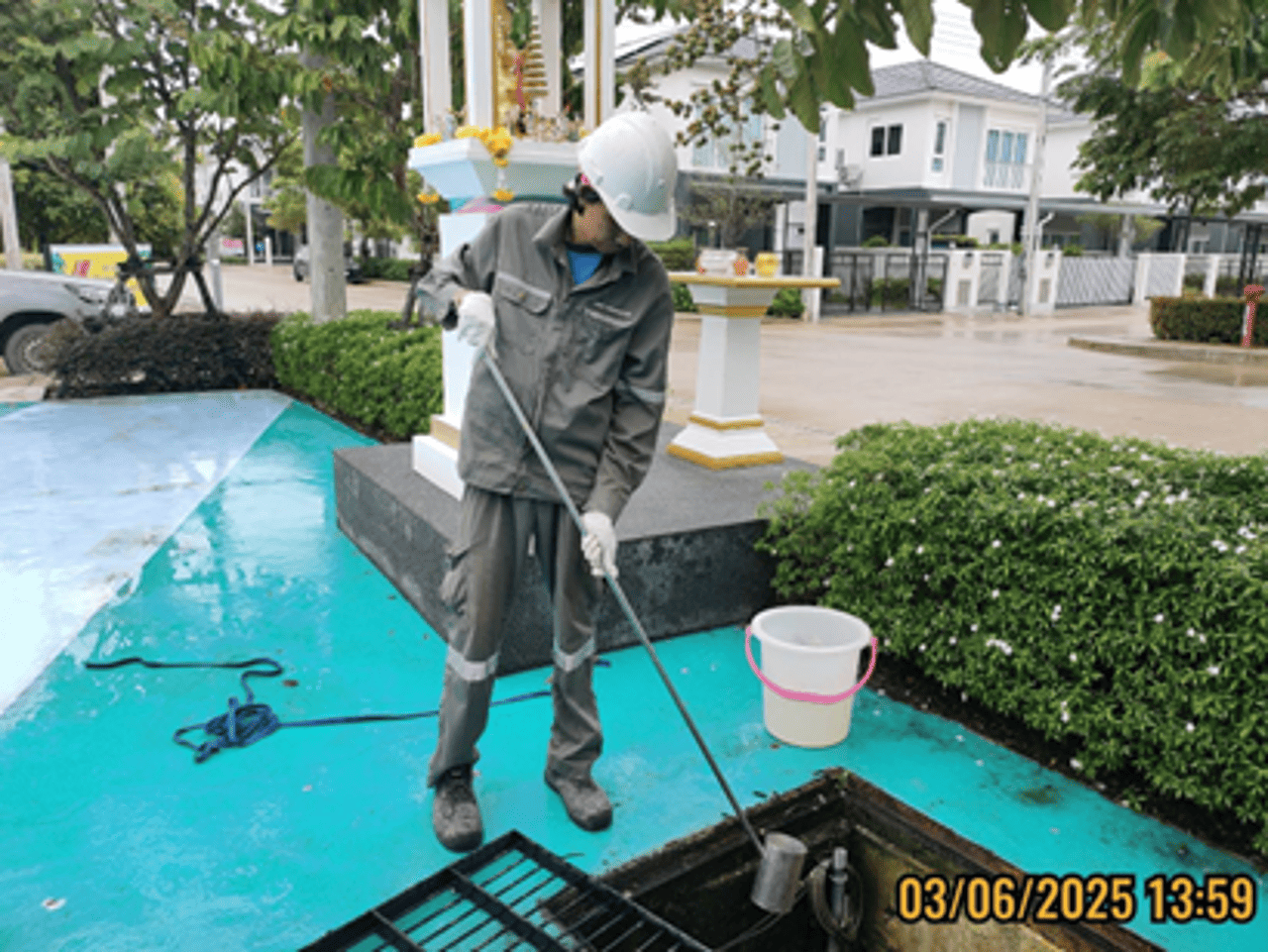
The company monitors and analyzes effluent water quality to control it before public discharge and to ensure water values comply with legal standards. Water samples are collected correctly and sent to reliable laboratories to ensure no toxic substances contaminate natural water sources and ecosystems. This also helps determine the composition and efficiency of the treatment system for targeted problem-solving, reducing health risks to the community and environment.
- Supalai Grand Tower requires effluent water quality to be measured as legally mandated before leaving the building, twice a year. Results are reported electronically on the 15th of every month, in accordance with ministerial regulations issued under Section 80, to the local official, Pollution Control Department, Ministry of Natural Resources and Environment.
- The company sets a goal and investment in R&D Investment in R&D to mitigate water-related risks for all Low Rise Projects and High Rise Projects to establish guidelines for controlling effluent water quality. This includes installing equipment, checking, and maintaining treatment systems before discharging wastewater into public water sources. Additionally, there are preventive maintenance plans and systematic repair plans to comply with legal requirements, ensuring that effluent water quality measurement results meet standard criteria.
Establishing measures for preventing and mitigating environmental impacts related to wastewater management
The company has established measures to prevent and mitigate environmental impacts and wastewater management for High Rise Projects and Low Rise Projects, categorized by priority and activity characteristics at each project stage, as follows:
Project Construction Phase During the construction phase, the main measures will focus on managing contaminated water from construction activities and worker accommodation to prevent impacts on natural water sources around the project area.
- Provide restrooms within the worker's accommodation, positioned away from adjacent buildings, with separate restrooms for male and female workers. The wastewater treatment system includes a septic tank, an anaerobic filter, and aeration, sized to accommodate the expected wastewater before discharge into the public drainage system, and sludge is pumped out of the septic tank annually.
- A foreman or supervisor is assigned to ensure workers regularly maintain restroom cleanliness to prevent foul odors and the breeding of germs.
- After construction, the project must properly dismantle the construction-phase utility systems for workers according to standards. This involves pumping all sludge from the septic and filter tanks, disinfecting with lime before permanent backfilling.
- Provide drainage channels around the construction area and a sediment trap with a trash screen before discharging to public areas.
- Sediment/cement/mud trap pond to capture sediment/cement/mud before discharging only water out of the project area into the public drainage system.
- Prepare an area for washing truck wheels before leaving the project site, using a high-pressure water jet to remove soil debris from the truck wheels, and provide a rubber squeegee to direct the wash water back into the project area, preventing it from flowing into the public drainage system outside the project.
- Clean the work area to prevent soil, cement, and construction debris from clogging or obstructing water flow and public drainage systems.
Project Operation Phase When the project becomes operational, measures will focus on the continuity and stability of the treatment system to accommodate wastewater from building operations.
- Provide a centralized activated sludge wastewater treatment system (Conventional type) with aeration, sized to accommodate the expected wastewater. It is buried underground within the project's internal roads. The treated water will meet the Ministry of Natural Resources and Environment's effluent quality standards before being discharged into the public drainage system.
- Regularly inspect the amount of fat in the grease trap monthly and pump out fat waste from the grease trap according to the scheduled time.
- Regularly inspect the volume of sewage monthly. Pump sewage from the septic tank according to the scheduled time.
- Regularly pump accumulated sludge from the sludge tank monthly or when the sludge tank is full. Authorized private companies are contracted to collect and dispose of it.
- Eliminate methane gas generated from the wastewater treatment system and treat wastewater aerosols from the aeration pond using the Soil Bed method.
- Two points are designated for measuring pre-treatment effluent water quality and one point for post-treatment effluent water quality. Measurements are taken once a month for one year to record comparative data of water quality before and after entering the centralized wastewater treatment system. After one year, measurements of treated effluent water quality will be taken at one point, with parameters conforming to the Ministry of Natural Resources and Environment's announcement.
Water Management Performance and Results 3 years retrospective
Water usage data for Supalai Grand Tower building
| Water consumption | Unit | 2023 | 2024 | 2025 |
|---|---|---|---|---|
| Total water used | Cubic meters | 108,750 | 111,528 | 96,610 |
| Water withdrawal by third-party water | Cubic meters | 108,750 | 111,528 | 96,610 |
| Water withdrawal by surface water | Cubic meters | 0 | 0 | 0 |
| Water withdrawal by groundwater | Cubic meters | 0 | 0 | 0 |
| Total recycled water for consumption | Cubic meters | 0 | 0 | 1,320 |
| Intensity of total water consumption | Cubic meters /m2 | 1.17 | 1.20 | 1.04 |
| Percentage of treated wastewater | % | 100 | 100 | 100 |
| Total wastewater discharge | Cubic meters | 83,554.96 | 86,332.96 | 71,934.96 |
Water usage data for 233 construction projects in Bangkok, its surrounding areas, and the regions, including Supalai Grand Tower
| Total water used | Unit | 2023 | 2024 | 2025 |
|---|---|---|---|---|
| Total water used | Cubic meters | 1,023,042.05 | 1,368,977.40 | 1,307,508.31 |
| Water withdrawal by third-party water | Cubic meters | 1,023,042.05 | 1,368,977.40 | 1,307,508.31 |