
Stakeholder Engagement

Value Chain Management
The Company has adopted value chain management processes as a key business strategy to foster business sustainability and enhance efficiency across all operational processes, from upstream, midstream, to downstream, throughout the value chain, with the utmost consideration for the benefits of all stakeholder groups, as follows:

SUPALAI Business Value Chain
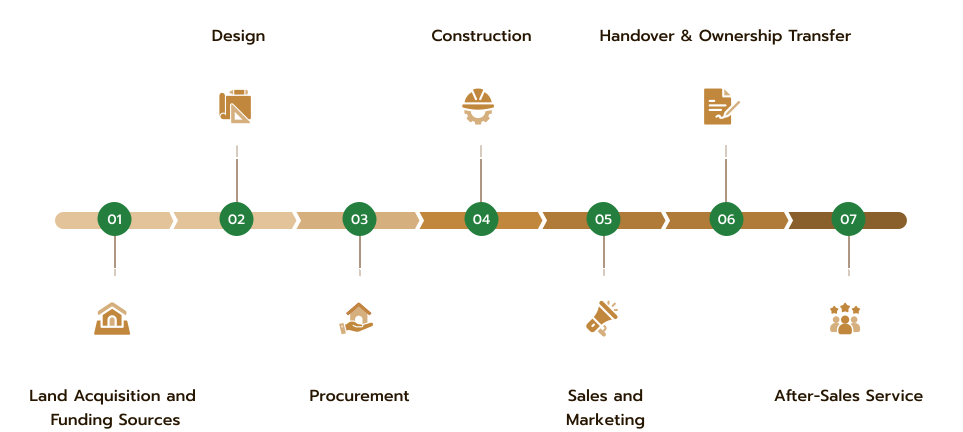

Land Acquisition and Funding Sources
The upstream process begins with a project feasibility study and location potential analysis, considering factors such as supply-demand, economic trends, urban growth, infrastructure, and consumer behavior, along with legal and urban planning risk assessment, before carefully acquiring land through due diligence and transparent land valuation processes.
Process
- Land, location, and project potential analysis
- Studying legal provisions and construction regulations
- Physical environmental risk analysis process before land acquisition
Stakeholders
- Investors and
- Shareholders
- Community / Society
- Landowners
- Adjacent landowners
- Government gencies
- Potential Customers
- Competitors

Design
After land acquisition, the project design and planning phase begins, integrating sustainable development concepts from the outset, such as energy-efficient building design, selection of environmentally friendly materials, green space planning, and efficient water management. This also includes preparing Environmental Impact Assessment (EIA) reports and soliciting feedback from community stakeholders to ensure the project develops in balance with society.
Process
- Environmental risk and opportunity assessment
- Design, considering government regulations and customer needs
- Selection of quality and environmentally friendly construction materials
- Obtaining permits from relevant authorities
Stakeholders
- Investors and shareholders
- Executives & Employees
- Potential customers
- Community / Society
- Government agencies
- Suppliers and trade alliances (designers, consultants, etc.)

Procurement
Establishing procurement criteria aligned with sustainability goals, such as selecting materials with environmental labels or certifications, and setting partner selection criteria based on ESG factors like raw material sources, clean energy use, labor management, and business ethics, to create a transparent supply chain, as well as developing work processes and innovations in collaboration with partners.
Process
- Establishing environmentally friendly procurement guidelines
- Partner selection process considering human rights, anti-corruption, and ESG
- Partner evaluation using ESG Criteria
- Developing the potential of partners and contractors
- Cost and budget management
Stakeholders
- Investors and
- shareholders
- Executives and
- employees
- Suppliers and trade
- alliances (procurers of goods and contractors)

Construction
The midstream phase is the core of business operations, covering construction processes, project management, contractor management, labor, and efficient construction timelines. It involves controlling costs and work quality according to specified standards, while also prioritizing occupational health and safety for workers and minimizing environmental impacts, such as controlling dust, noise, and construction waste.
Process
- Fair contractor selection criteria
- Planning construction work to reduce waste and use recycled materials
- Developing construction processes for the safety of workers, communities, society, and the environment
- QC according to ISO 9001: 2015 standards
- Measures to prevent and mitigate social and environmental impacts
- Communicating complaint channels to communities around the project
Stakeholders
- Investors and
- shareholders
- Executives and
- employees
- Suppliers and trade
- alliances (contractors)
- Neighboring communities
- Government agencies

Sales and Marketing
Operating transparently, providing accurate information to customers, and promoting products that meet sustainable living needs, such as energy-efficient buildings or projects with access to public transportation, as well as protecting personal data.
Process
- Providing complete information
- Customer data protection
- Marketing communication strategies, such as advertising media, sales promotion activities, and marketing events
- Customer feedback
- Preliminary credit assessment for customers
Stakeholders
- Investors and shareholders
- Executives and employees
- Customers
- Business partners and trade alliances (Banks)
- Competitors

Handover & Ownership Transfer
The downstream process begins with delivery and ownership transfer to customers, including product warranties and after-sales service.
Process
- Quality inspection process before delivery
- Customer appointments for home inspection and ownership transfer
- Facilitating customers, such as applying for loans with commercial banks
- Customer care after ownership transfer
Stakeholders
- Investors and shareholders
- Executives and employees
- Customers
- Suppliers and trade
- alliances (juristic persons, banks)
- Government agencies

After-Sales Service
To ensure confidence in product and service quality, the Company provides product warranties to customers for both components and structures. Furthermore, it focuses on and prioritizes maintaining high standards of after-sales service quality, including operations that align with ESG criteria, such as efficient management of energy, water, and waste. Customer satisfaction surveys are also conducted to gather feedback for improving product and service quality.
Process
- Warranty and maintenance services
- Customer satisfaction surveys
- Customer Relations management
- Juristic person management
- Supalai Contact Center 1720
- Supalai SABAI Application
Stakeholders
- Customers
- Juristic Person



Stakeholders in the Value Chain
The Company recognizes that both internal and external stakeholders are crucial for sustainable business operations, as they are affected or may be affected by the Company's operations, or can create an impact or influence business operations. Therefore, the Company prioritizes stakeholder engagement throughout the value chain, with the following processes for engaging with stakeholders:
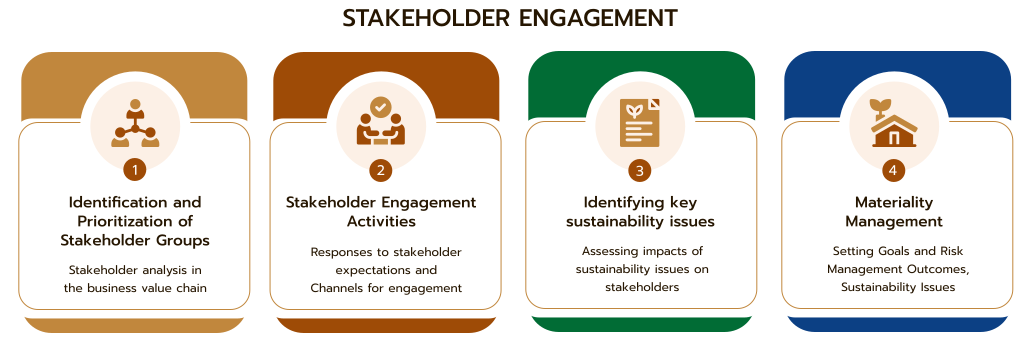
Identification and Prioritization of Stakeholder Groups
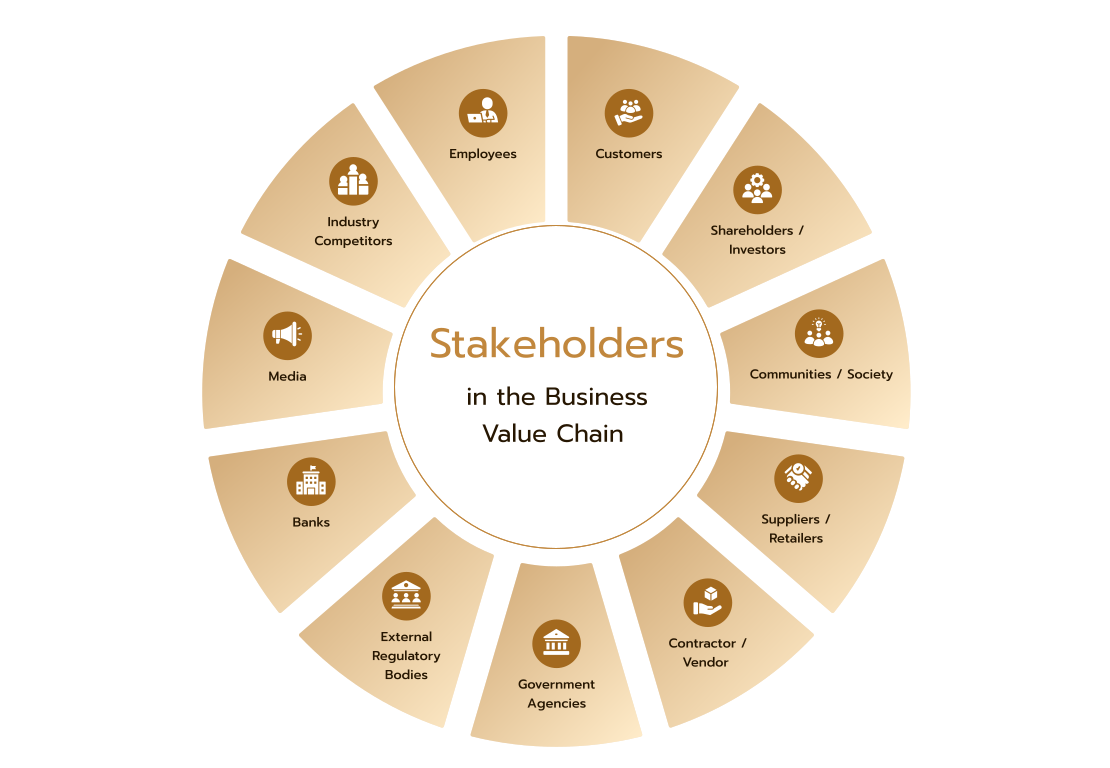
The Company categorizes stakeholder groups in its value chain into 11 groups: 1) Employees, 2) Customers, 3) Shareholders/Investors, 4) Communities/Society, 5) Suppliers/Retailers 6) Contractors/ Vendor, 7) Government Agencies, 8) External regulatory bodies, 9) Banks, 10) Media and 11) Industry competitors. The Company's internal stakeholders include employees, while external stakeholders include customers, shareholders/investors, communities/society, business partners/retailers, contractors/suppliers, government agencies, external regulators, banks, media, and competitors in the same industry. The prioritization of stakeholders is determined by considering the level of the Company's impact on each stakeholder group across economic, social, environmental, and human rights dimensions, combined with the level of impact or influence from each stakeholder group on the Company. This approach helps define strategies for building connections and fostering stakeholder engagement, as well as planning appropriate operations for each stakeholder group.
Prioritizing Stakeholders the Company has established the following stakeholder management strategies:
- Manage Strategically: Build strong relationships and foster collaboration to align stakeholders' needs and expectations with the organization's goals, leading to mutual benefits and long-term success.
- Keep Satisfied: Address significant stakeholder needs and concerns to maintain their support.
- Keep Informed: Provide accurate information and communicate transparently and consistently to keep stakeholders updated on progress and build trust and confidence.
- Monitor: Observe and assess stakeholders' interests and operations that may impact on the Company.
Stakeholder Engagement Activities
The Company assigns departments responsible for each stakeholder group to systematically survey their needs and expectations through various communication channels at least once a year, under the supervision of the Sustainability Committee. This is to foster stakeholder engagement and assess the impacts that each stakeholder group has experienced or may experience in the future, as well as other concerns and expectations from stakeholders. The Company collects significant stakeholder needs, expectations, concerns, and feedback relevant to its business operations to analyze key sustainability issues (Materiality) and establish appropriate management approaches to address them. In 2025, the Company engaged and operated with stakeholders as follows:


Channels for engagement and communication
- Monthly Executive Board Meeting, Sub-meetings for each department
- Quarterly Welfare Committee Meetings
- Annual Employee Engagement Survey
- Monthly Safety Committee Meeting
- Monthly Risk Working Group Meeting
- Communication via online media, intranet, and email
- Complaint and Whistleblowing Channels via Email and Complaint and Feedback Box within the Company

Stakeholders' Expectations |

Responses to stakeholder expectations |
|---|---|
| 1. Fair compensation and benefits |
|
| 2. Transparency and fairness in performance evaluation |
|
| 3. Treatment of employees with respect for their dignity, honor, and human rights principles |
|
| 4. Job security and career path |
|
| 5. Occupational health and safety |
|
| 6. Open communication and receptiveness to feedback |
|

Channels for engagement and communication
- Project Sales Office
- Monthly Customer Satisfaction Survey
- Organization of Customer Relations Activities / Marketing Activities
- Communication via online media, email, and telephone
- Company's Whistleblowing/Complaint Channels
Stakeholders' Expectations |
Responses to stakeholder expectations |
|---|---|
| 1. Quality houses and condominiums that meet standards and requirements, such as construction quality, quality of materials used in the property, or safety systems for residents. |
|
| 2. High-quality, efficient, and prompt service. |
|
| 3. Compliance with sales agreements. | Comply with sales agreements. Ownership transfer is carried out within the period specified in the contract. |
| 4. Personal data protection (PDPA). |
|
| 5. Building good relationships with customers. |
|

Channels for engagement and communication
- Annual General Meeting of Shareholders and Extraordinary General Meeting of Shareholders
- Quarterly joint meetings with securities analysts and fund managers (Analyst Meeting).
- Participate in the Stock Exchange of Thailand's Opportunities Day events twice a year
- Investor meetings at least once a year
- Domestic and International Roadshow
- Disclosure of Information in Form 56-1 e-One Report and the Company's Website
- Channels for Reporting Information and Receiving Complaints
Stakeholders' Expectations |
Responses to stakeholder expectations |
|---|---|
| 1. Disclosure of accurate and transparent operating results, in compliance with the regulations of the Stock Exchange of Thailand and disclosure criteria. |
|
| 2. Maintaining the company's financial stability and security. |
|
| 3. Equitable treatment of shareholders. | Disclose information on overall operating results and business growth to shareholders through channels accessible to all shareholders. |
| 4. Business growth and good operating performance, along with good dividends or returns. |
|
| 5. Good corporate governance. |
|

Channels for engagement and communication
- Communication via online media, email, and Supalai Contact Center 1720
- Opinion Survey using Questionnaires
- Public consultation to gather feedback from the community
- Community Satisfaction and Engagement Survey
- Company's Whistleblowing/Complaint Channels
Stakeholders' Expectations |
Responses to stakeholder expectations |
|---|---|
| 1. Environmental operations in compliance with laws and regulations |
|
| 2. Job creation and career opportunities for local communities |
|
| 3. Occupational safety and health |
|
| 4. Community relations activities |
|

Channels for engagement and communication
- Monthly meetings with partners and retailers
- Annual visits to partner establishments.
- Communication via online media, email, and Supalai Contact Center 1720
- Channels for Reporting Information and Receiving Complaints
Stakeholders' Expectations |
Responses to stakeholder expectations |
|---|---|
| 1. Transparent and fair procurement process |
|
| 2. Compliance with laws and agreements | Comply with relevant laws and regulations, as well as procurement guidelines, and procurement contracts or mutual agreements. |
| 3. Timely and complete payment | Make payments according to installments or credit terms specified in the contract conditions, adhering to principles of accuracy, transparency, and promptness. |
| 4. Developing partner capabilities and knowledge | Organize knowledge-sharing programs on key human rights quality development and new regulations affecting the real estate development business. |

Channels for engagement and communication
- Monthly work plan meeting with contractors/suppliers
- Annual assessment of contractors
- Morning Talk for all projects
- Communication via online media, email, and Supalai Contact Center 1720
- Whistleblowing and Complaint Channels
Stakeholders' Expectations |
Responses to stakeholder expectations |
|---|---|
| 1. Continuous employment |
|
| 2. Compliance with laws and agreements | Comply with relevant laws and regulations, as well as procurement guidelines in TOR and construction contracts. |
| 3. Occupational safety, health, and working environment |
|
| 4. Timely and complete payment | Make installment payments to contractors and suppliers via e-Payment for convenience and speed, adhering to principles of accuracy, transparency, and promptness. |
| 5. Development of potential and knowledge for contractors or vendor |
|

Channels for engagement and communication
- Prepare operational performance reports in accordance with laws and regulations.
- Participation in government-organized seminars and conferences related to the industry.
- Disclosure of Information in the 56-1 e-One Report and the Company's Website
Stakeholders' Expectations |
Responses to stakeholder expectations |
|---|---|
| 1. Compliance with laws and regulations |
|
| 2. Environmental management and safety management |
|
| 3. Cooperation with and support for government agencies |
|
| 4. Good corporate governance | Monitor operations in all departments to ensure accuracy, transparency, and auditability. |
| 5. Disclosure of company performance | Prepare accurate performance reports and disclose them to the public within specified periods, or submit information as requested by government agencies. |

Channels for engagement and communication
- Prepare a report on operational performance in accordance with international standards.
- Partner Business Visit Activities
- Information Disclosure in Financial Statements, Annual Report Form 56-1 e-One Report
- Disclosure of Sustainability Information on the Company's Website
Stakeholders' Expectations |
Responses to stakeholder expectations |
|---|---|
| 1. Compliance with criteria or requirements according to international standards |
|
| 2. Management of economic, social, and environmental impacts |
|
| 3. Cooperation with and support for external regulatory bodies |
|
| 4. Disclosure of company performance | Preparation of accurate performance reports and public disclosure according to specified timelines, or submission of information as requested by external regulatory bodies. |

Channels for engagement and communication
- Meeting with the bank
- Business Visit Activities
- Communication via online media, email, and Supalai Contact Center 1720
- Channels for Reporting Information and Receiving Complaints
Stakeholders' Expectations |
Responses to stakeholder expectations |
|---|---|
| 1. Effective risk management |
|
| 2. Compliance with agreed loan and debenture covenants/ Timely debt repayment according to terms |
|

Channels for engagement and communication
- Hold a press conference at least once a year.
- Business Visit Activities
- Media Engagement
Stakeholders' Expectations |
Responses to stakeholder expectations |
|---|---|
| 1. Accurate and complete information or operational results |
|

Channels for engagement and communication
- Meetings and joint sessions organized by industry-related organizations or agencies
Stakeholders' Expectations |
Responses to stakeholder expectations |
|---|---|
| 1. Fair competition |
|
