Supply Chain Management


Supporting the Sustainable Development Goals (SDGs)



Goals and Performance Highlights
Goals


Performance



Commitment, Challenge and Opportunity
The Company places great importance on supply chain management, recognizing suppliers as key business partners who play a critical role in supporting the organization’s sustainable operations. Under a policy that upholds transparency, fairness, and consideration of impacts on communities, society, and the environment in all dimensions, the Company has established criteria for selecting capable, high-quality suppliers. Priority is given to product and service standards, on-time delivery, compliance with labor laws and human rights, as well as all relevant requirements and regulations. These practices helps strengthen a transparent and well-governed procurement system and reduce long-term business risks.
In the context of rapid global supply chain changes, the Company acknowledges several key challenges, such as raw material cost volatility, shortages of skilled labor, and risks related to the continuity of critical suppliers. At the same time, the Company sees opportunities to raise the standard of collaboration with suppliers through systematic selection and evaluation processes, as well as by building long-term, stable business relationships.
With a commitment to grow, while creating value for all stakeholders, the Company continues to develop a robust, transparent, and resilient supply chain. This includes promoting ethics and sustainability in every process to meet the expectations of customers and stakeholders in an era defined by circular economy principles and sustainable competitiveness.


Management and Strategic Approach


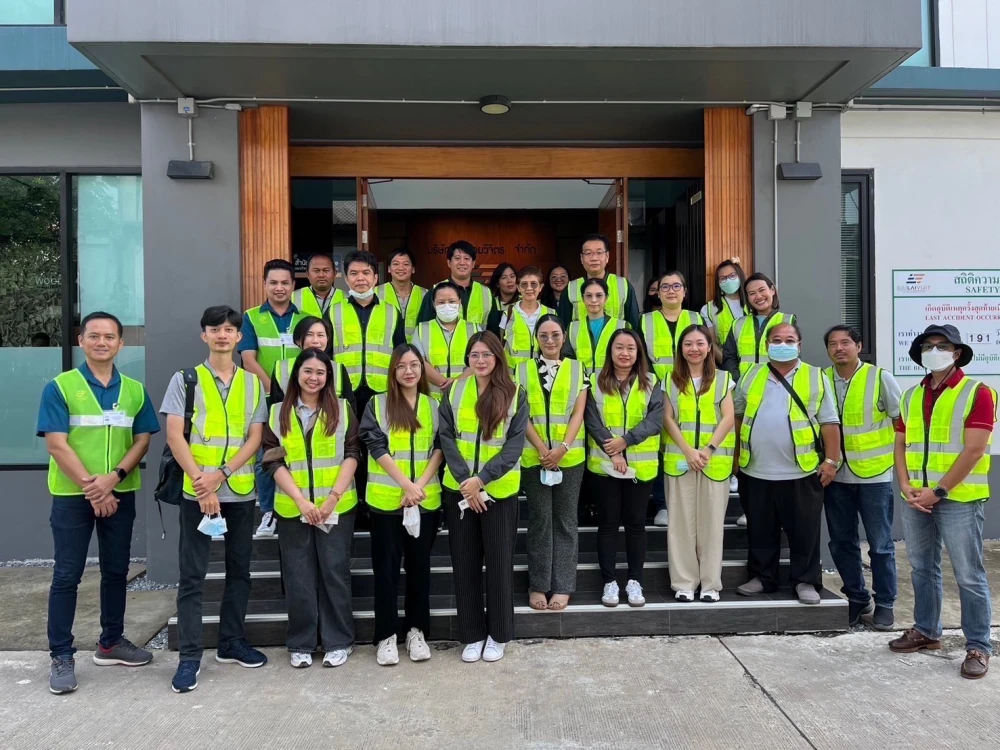
During the supplier capability assessment process, the Company works collaboratively with the Supplier Selection Committee, which comprises relevant departments such as Procurement, Construction, Product and Project Development, Marketing, and others. This ensures that the selection process is comprehensive across all dimensions, including product quality, pricing, delivery capability, and environmental responsibility. For example, selecting materials produced through environmentally friendly manufacturing processes, and establishing quality standards for products with longer lifespans to enhance the quality of materials and services used in construction projects.
The Company also implements a project-based waste material management initiative that upcycles leftover materials into new products, for example, using washed concrete waste to produce subbase materials and precast floor panels for use in other projects.
The Company also promotes collaboration among the organization, business partners/suppliers, and external experts by providing platforms for dialogue, such as focus groups or stakeholder exchange forums on key issues including risks, stakeholder expectations, brand reputation, service quality, corporate governance and sustainable product development. Examples include joint initiatives with the CAC for SME suppliers to promote anti-corruption practices, as well as CSR activities conducted with partners in local communities under the “Supalai Creates Goodness” program, such as projects that enhance the health, quality of life, and well-being of construction workers and contractors within the Company’s projects.
Through these approaches, the Company remains committed to building a strong, transparent, and responsible supply chain that grows sustainably alongside its partners and stakeholders over the long-term.
Stakeholders Directly Impacted

Employees
Positive Impacts
- Work with suppliers who meet quality and ethical standards, gain greater understanding of sustainable supply chain management, and reduce risks in procurement.
Expected Impacts / Risks
- May have to deal with more complex supplier selection processes and adjust working methods to align with sustainability criteria.

Suppliers / Retailers
Positive Impacts
- Gain the opportunity to build partnerships with organizations that prioritize sustainability, building credibility and opportunities for long-term joint growth.
Expected Impacts / Risks
- Must comply with environmental, labor, and ethical standards, which may involve cost to improve production processes or supply chain management

Shareholders / Investors
Positive Impacts
- Gain confidence in the Company's ability to manage supply chain risks, increasing the likelihood of stable long-term returns.
Expected Impacts / Risks
- If there is a failure in supplier management, it may negatively impact business continuity and financial stability.

Customers
Positive Impacts
- Confidence in the safety and high-quality of products/services with clear traceability that comply with environmental and ethical standards.
Expected Impacts / Risks
- If suppliers fail to meet standards or encounter procurement issues, it may affect product/service quality or delivery.

Government Agencies and External Regulators
Positive Impacts
- See the Company’s determination to complying with laws, and standards regarding environmental, labor, and transparency.
Expected Impacts / Risks
- If the Company is unable to ensure suppliers for compliance, the Company may face inspections or legal action.

Communities / Society
Positive Impacts
- Benefit positively when the Company selects suppliers that are socially and support the local economy and environment.
Expected Impacts / Risks
- If procurement processes are not carefully controlled, it may impact the environment, local communities, or human rights in the supply chain.