Sustainable Supply Chain Management


Supporting the Sustainable Development Goals (SDGs)


Goals and Performance Highlights


Commitment, Challenge and Opportunity

The Company prioritizes supply chain management as a business partnership which plays a crucial role in supporting the organization's sustainable operations under policies based on transparency, fairness, and consideration of impacts on communities, society, and comprehensive environmental considerations. Therefore, the Company sets criteria for selecting potential and qualified suppliers according to its standards, emphasizing the quality and standards of goods and services, on-time delivery, compliance with labour laws and human rights, as well as relevant regulations and rules, to foster a transparent and well-governed procurement system and reduce long-term business risks.
The Company integrates supply chain management under the concept of Value Chain Responsibility, covering the entire lifecycle of products and services, from raw material sourcing, construction, and delivery to usage and demolition. It assesses environmental, social, and governance (ESG) impacts, risks, and opportunities (IROs) throughout the value chain, including direct and indirect suppliers (Tier-1 and Non-Tier Suppliers), to support disclosure in accordance with IFRS Sustainability Disclosure Standards, TCFD, and TNFD.
In the context of rapid changes in the global supply chain, the Company recognizes significant challenges such as volatility of raw material cost, skilled labour shortages, risks from raw material scarcity, and the continuity of key suppliers. This also includes analyzing physical risks and transition risks related to climate conditions. Simultaneously, it sees opportunities to elevate cooperation standards with suppliers through systematic selection and performance evaluation, as well as building stable long-term business relationships and adapting with suppliers towards a circular economy to reduce resource consumption and emissions greenhouse gases is an opportunity to create a competitive advantage, not just for the Company, but also for its suppliers with a commitment to growth alongside value creation for all sectors, the Company continues to develop a strong, transparent, and stable supply chain. It also promotes ethics and sustainability in all processes to meet the expectations of customers and stakeholders in the era of the circular economy and sustainable competition.
Governance Structure
The Company assigns a committee, comprising relevant departments such as Procurement, Creative & Product Development, Marketing & Sales, Engineering & Estimate, and Construction, to consider and select materials and equipment, and to be responsible for implementing the policy to achieve the specified goals. Manage suppliers in the supply chain in accordance with international practices and standards to reduce supplier risks and ensure that selection covers all dimensions, including product quality, price, delivery capability, and social and environmental responsibility. The corporate governance unit develops and publishes a Supplier Code of Conduct to communicate the Company's intention to conduct business ethically, transparently, and with social and environmental responsibility throughout the supply chain. Oversight is provided at the Board of Directors level through the Sustainability Committee, which is responsible for directing strategy and supply chain risk management, as well as monitoring ESG Supply Chain Performance indicators monthly.


Strategies and Management Approaches

Policy and Commitment
The Company prioritizes the selection of suppliers, contractors, and materials/equipment based on ESG principles (Environmental, Social, and Governance) to promote shared responsibility throughout the supply chain, especially in social, environmental, and business ethics aspects. The Company therefore establishes systematic processes for selecting, evaluating, and registering suppliers and contractors, and discloses relevant ESG issues, including expected impacts, to reduce supply chain management risks and to ensure suppliers Contractors acknowledge by signing “The Company's Supplier Code of Conduct” which consists of
- Business Ethics and Transparency
- Quality Standards, Business Continuity
- Respect for human rights, covering equal treatment, prevention of forced labor, prevention of child labor. Contractors and suppliers comply with laws prohibiting working hours exceeding legal limits, fair wages, equal opportunities, and supporting the right to organize and collectively bargain.
- occupational health and safety, providing safe and hygienic work areas and environments, and preventing employees from safety risks.
- social responsibility, social and community care, land rights, and access to natural resources.
The Company conducts Human Rights and Environmental Due Diligence (HREDD) for suppliers, in line with the United Nations Guiding Principles on Business and Human Rights (UNGP) and OECD Due Diligence Guidance which covers identifying, preventing, mitigating, and monitoring human rights, labour, environmental, and community risks, along with establishing mitigation and remediation measures for at-risk suppliers.
Additionally, the Company has established “Terms of Reference (TOR)”
- To serve as a framework and guidelines for fair procurement practices with contractors and suppliers, as well as to promote value creation for local communities.
- To serve as guidelines for conducting business with suppliers and contractors on social and environmental aspects in construction operations, by setting operational conditions for creating sustainability throughout the supply chain to reduce risks and negative impacts on the environment, society, and economy across the supply chain. It consists of 3 main parts: environmental impact management and reduction plans (e.g., dust, noise, wastewater, waste management), prevention and reduction of social impacts (e.g., traffic), and monitoring measures (e.g., pre-construction, during-construction, and post-construction checks).
The Company integrates environmental policy as part of its business operations, from sourcing environmentally friendly materials, production, product delivery, marketing and sales, and after-sales service, to supply chain management and waste disposal, considering environmental impact reduction, environmental conservation, climate management, and adaptation to climate change. This is done in alignment with the Company's greenhouse gas reduction targets, including biodiversity and ecosystem preservation through efficient resource utilization.
Policy on Environmental and Practices
The Company communicates its Supplier Code of Conduct and procurement regulations for contractors, suppliers, and employees, establishing clear operational guidelines under relevant laws and regulations. This covers business ethics, human rights, safety, and environmental aspects, aligning with the Supplier Code of Conduct that is consistent with sustainable business principles, to foster trust, confidence, and cooperation among the Company, contractors, suppliers, and relevant stakeholders.
Management Approaches
Establish criteria for suppliers to reduce greenhouse gas emissions from their operations.
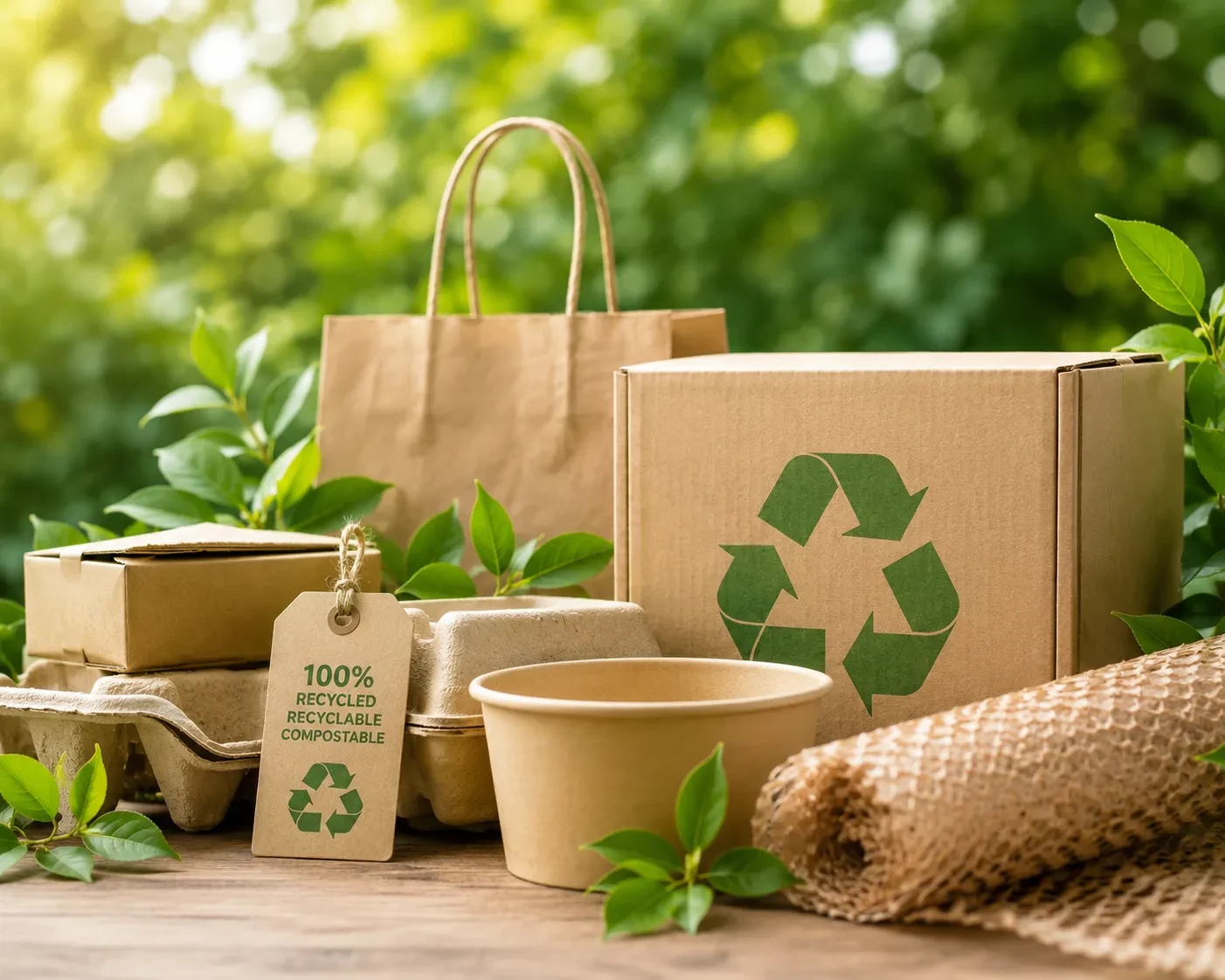
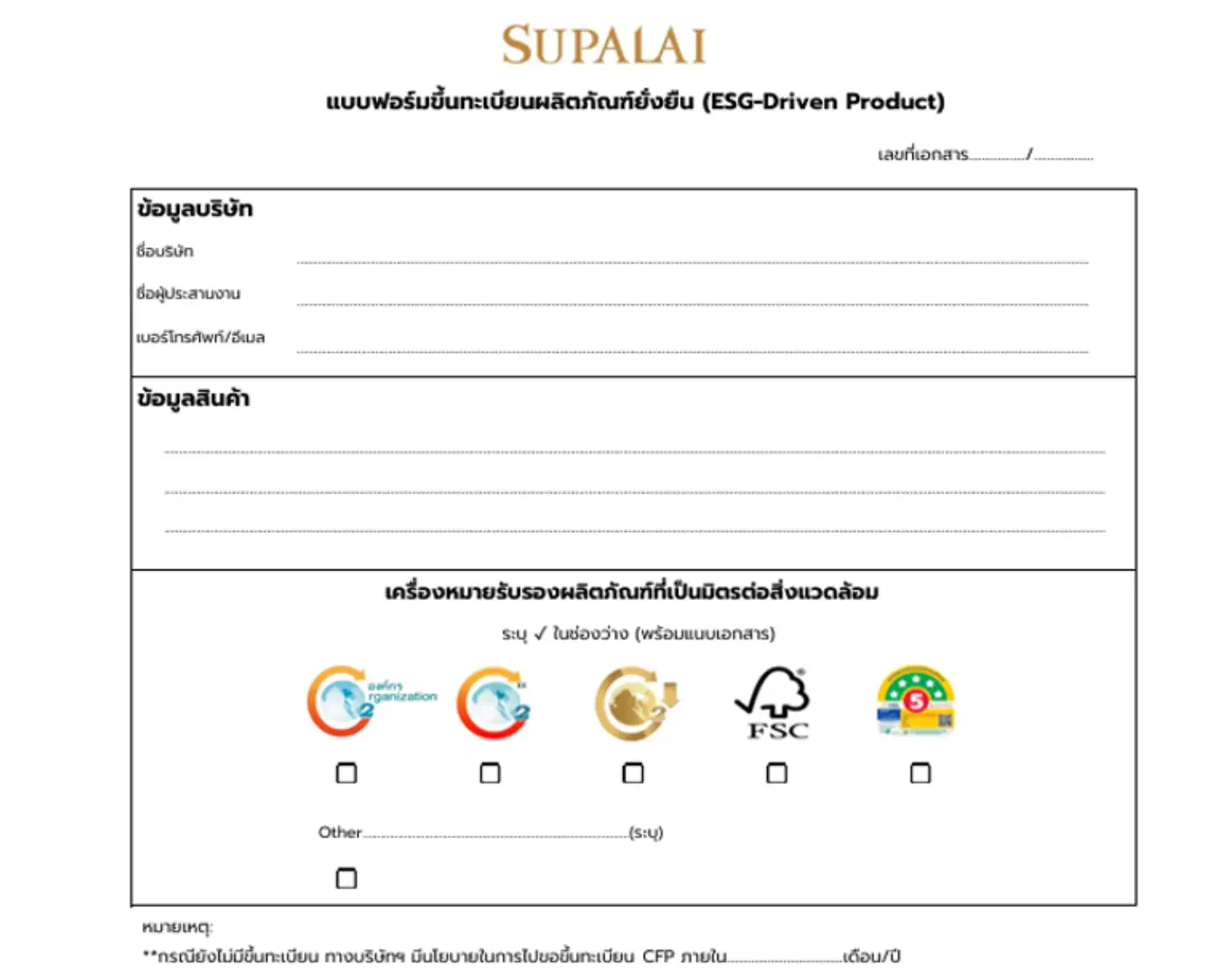
The Company is committed to procuring environmentally friendly products, emphasizing the selection of products that has a certification label for being friendly to environment and has a policy to encourage all suppliers to develop environmentally friendly products for presentation to the Company. Including encouraging suppliers organizations to prioritize production processes, material sourcing, delivery processes, and waste disposal in the form of Recycle including inquiring about and visiting waste disposal processes that do not harm the environment. All suppliers are required to register sustainable products (ESG -Driven Product) to control and reduce supply chain risks that may arise from suppliers, such as violations of human rights or environmental impacts.
Supply Chain Management
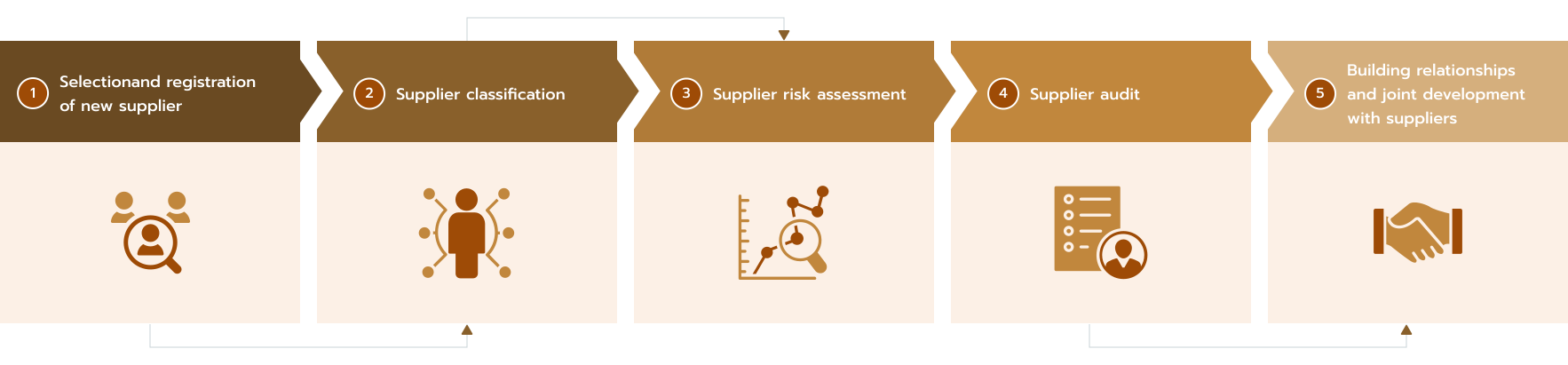
The Company follows operational processes to develop a sustainable supply chain as follows: 1) Selection and registration of new suppliers 2) Supplier classification 3) Supplier risk assessment 4) Supplier audit, and 5) Building relationships and joint development with suppliers, with procurement practices to control and reduce supply chain risks that may arise from suppliers, such as human rights violations, unfair practices, or environmental impacts, and conduct comprehensive investigations (Due diligence) to prevent and mitigate social and environmental impacts in the value chain, and to disclose sustainability reports according to international standards such as GRI Standard GRI 204: Procurement Practices, Supply Chain Environmental GRI Standard GRI 308: Supplier Environmental Assessment, and Supply Chain Social GRI 414: Supplier Social Assessment, as well as complying with laws and regulations, in accordance with SEC requirements that mandate listed companies to disclose ESG information via Form 56-1 e-One Report.
Operational Processes for Sustainable Supply Chain Development

Grievance and Remediation Mechanism in the Supply Chain
The Company provides a Supply Chain Grievance Mechanism for workers, suppliers, communities, and stakeholders in the supply chain, enabling them to safely, confidentially, and without retaliation report human rights violations, unfair labour practices, or environmental impacts. The Company establishes appropriate investigation, corrective, and remediation processes (non-retaliation), and continuously monitors results through quality control procedures according to ISO 9001:2015 via Supalai contact center 1720.
Stakeholders Directly Impacted

Employees
Positive Impacts
- Work with suppliers who meet quality and ethical standards, gain greater understanding of sustainable supply chain management, and reduce risks in procurement.
Expected Impacts / Risks
- May have to deal with more complex supplier selection processes and adjust working methods to align with sustainability criteria.

Suppliers / Retailers
Positive Impacts
- Gain the opportunity to build partnerships with organizations that prioritize sustainability, building credibility and opportunities for long-term joint growth.
Expected Impacts / Risks
- Must comply with environmental, labor, and ethical standards, which may involve cost to improve production processes or supply chain management

Shareholders / Investors
Positive Impacts
- Gain confidence in the Company's ability to manage supply chain risks, increasing the likelihood of stable long-term returns.
Expected Impacts / Risks
- If there is a failure in supplier management, it may negatively impact business continuity and financial stability.

Customers
Positive Impacts
- Confidence in the safety and high-quality of products/services with clear traceability that comply with environmental and ethical standards.
Expected Impacts / Risks
- If suppliers fail to meet standards or encounter procurement issues, it may affect product/service quality or delivery.

Government Agencies and External Regulators
Positive Impacts
- See the Company’s determination to complying with laws, and standards regarding environmental, labor, and transparency.
Expected Impacts / Risks
- If the Company is unable to ensure suppliers for compliance, the Company may face inspections or legal action.

Communities / Society
Positive Impacts
- Benefit positively when the Company selects suppliers that are socially and support the local economy and environment.
Expected Impacts / Risks
- If procurement processes are not carefully controlled, it may impact the environment, local communities, or human rights in the supply chain.
Performance Results
The Company has developed a Supplier Code of Conduct whose content and scope align with the Company's Business Code of Conduct, as well as international principles and best practices. Training and communication are provided to all suppliers to raise awareness of the importance of conducting business responsibly towards the environment and society, and with good corporate governance, as well as to serve as guidelines for suppliers to operate in accordance with the Company's guidelines. All direct suppliers (Tier-1 suppliers) and new suppliers are required to sign an acknowledgment from the start of the supplier registration process. There is a process to monitor supplier operations and evaluate their performance to ensure compliance with the Supplier Code of Conduct. Suppliers must be able to demonstrate compliance with the Code of Conduct whenever requested. The Company will use various methods determined by the level criteria supplier risks, such as requiring suppliers to self-certify compliance with the Code of Conduct, conducting on-site supplier audits, or using questionnaires.
In 2025, the Company communicated and had suppliers sign an acknowledgment of the Supplier Code of Conduct as follows:
| Supplier Code of Conduct | 2025 |
|---|---|
| Direct Suppliers (Tier-1 Suppliers) | |
|
100% |
|
100% |
| New Suppliers | |
|
100% |
|
100% |
Supplier and Contractor Management
Selection and Registration of New Suppliers
The Company establishes guidelines for considering the selection and registration of new suppliers by checking the initial qualifications of suppliers and contractors before procurement, using a questionnaire with 4 basic qualification assessment criteria and checking relevant quality standard certification documents. Additionally, the Company requires all new suppliers to undergo risk assessment, sustainability, covering environmental, social, human rights, safety and hygiene, and governance aspects, using a supplier self-assessment form before proceeding with new supplier registration.
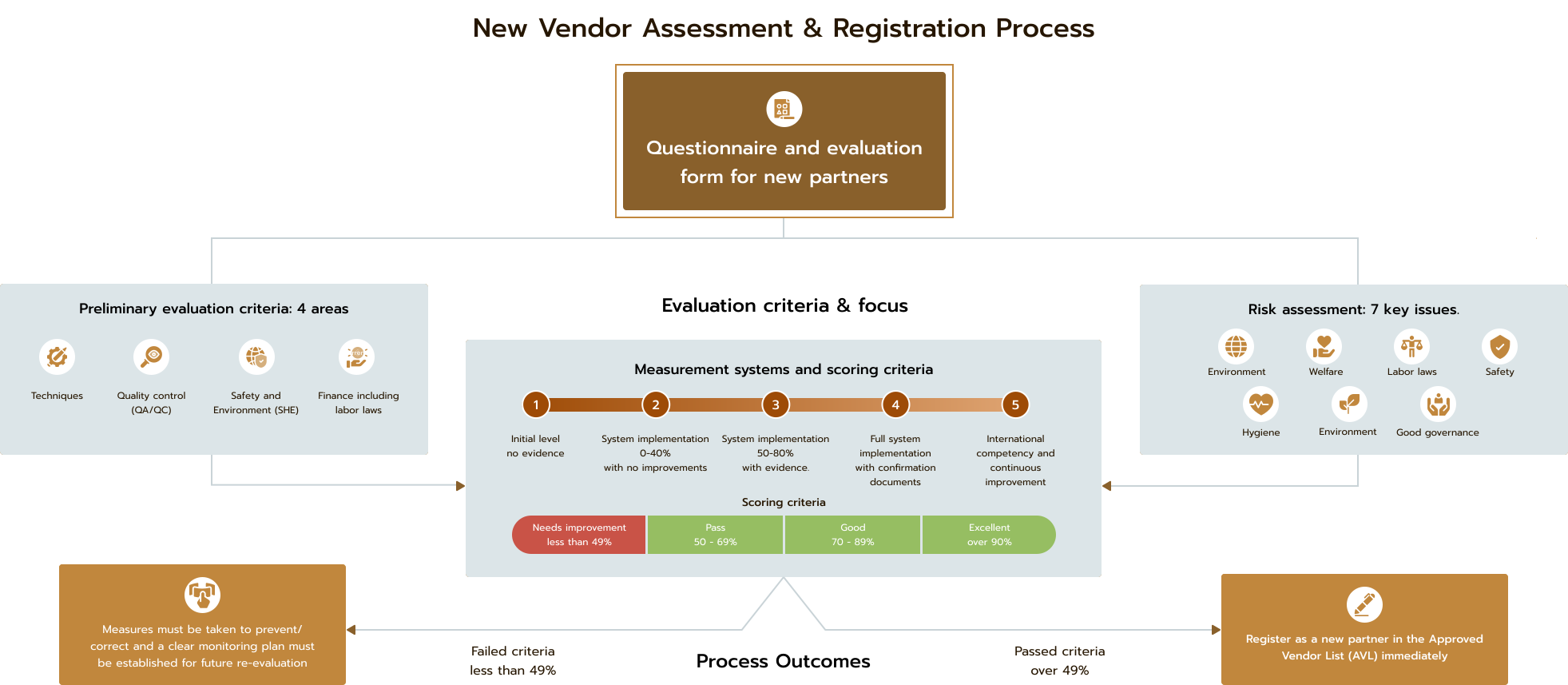
When new suppliers whose scores meet the criteria and have no economic, social, environmental, or governance risks sign an acknowledgment of the Supplier Code of Conduct, the Company will proceed with new supplier registration. However, if the scores do not meet the assessment criteria or there are risks, the supplier must implement corrective actions or preventive measures and have a clear monitoring plan to achieve an acceptable score before being registered as a new supplier with the Company.
In 2025, the Company registered 97 new suppliers who passed the selection process, representing 99% of all new suppliers.
Supplier Classification
Identification of Critical Suppliers
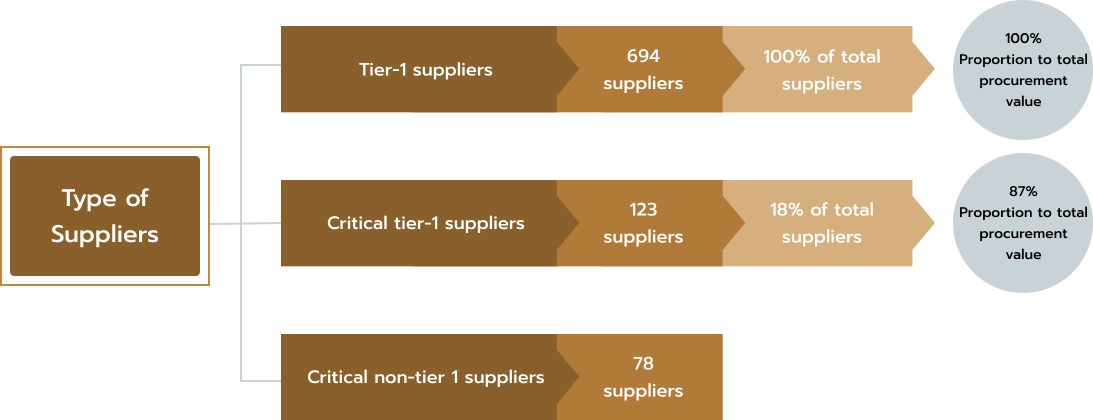
In 2025, the Company had a total of 123 direct suppliers and contractors in its supply chain (Tier-1 suppliers) of these, 98 were construction material suppliers, accounting for 80% of all suppliers.
The Company analyzed and identified critical suppliers from those providing goods and services in the entire supply chain, using criteria to identify critical suppliers based on with annual procurement values exceeding 5 million THB, being a supplier of essential business components, and being a niche supplier in the market or one for whom no alternative products can be found. The criteria for identifying suppliers are as follows:
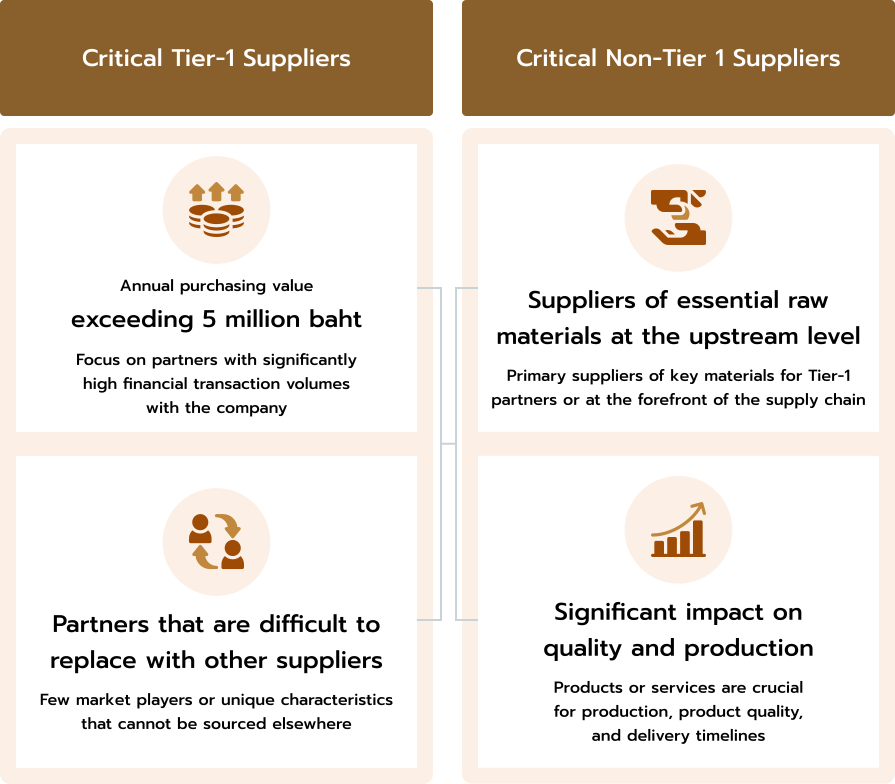
From the analysis, it was found that the Company has 123 critical tier-1 suppliers, accounting for 18% of all suppliers, with a procurement value representing 87% of the total procurement value. Of these, 98 are construction material suppliers, accounting for 80% of all critical tier-1 suppliers.
As for critical non-tier 1 suppliers, there are 78 entities.
Supply Chain Risk Assessment
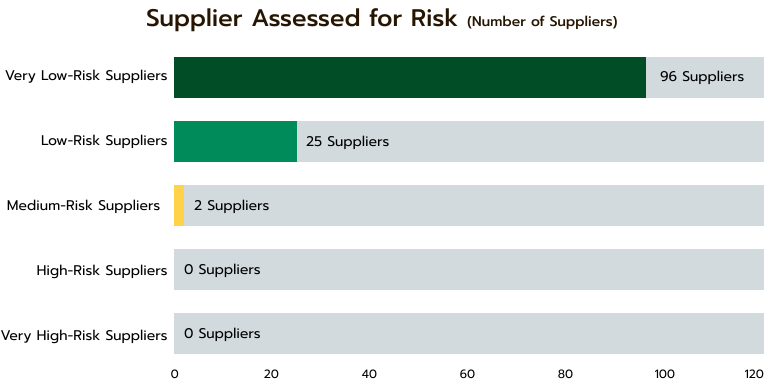
The Company assesses supplier risks that may impact its business operations, society, and the environment at least annually once, using supplier assessment forms, interviews, and reference document verification. This covers economic risks such as quality, delivery time and consistency, and origin; Environmental risks such as compliance with environmental laws, management, and prevention of impacts on environment and natural resources; Social aspects such as labour practices, respect for community rights, and safety; and corporate governance aspects such as fair competition and prevention of corruption. The Company determines risk levels based on assessment scores and sets additional operational guidelines for suppliers with various risk levels as follows:
The assessment is linked to Enterprise Risk Management and climate-related risks, climate, including Nature-related Risks, to support the management of Scope 3 Greenhouse Gas Emissions and the long-term business continuity of the supply chain.
| Risk Level | Operational guidelines for controlling and monitoring risks |
|---|---|
| Very low |
|
| Low |
|
| Medium |
|
| High |
|
| Very High |
|
In 2025, the Company assessed the risks of its direct suppliers with procurement values exceeding 5 million Baht. and above, totaling 123 entities, representing 18% of all suppliers. "No suppliers were found to have very high risk." All suppliers met the Company's specified standards.
Supplier Audit
The Company conducts on-site supplier audits covering economic, environmental, social, and governance (On-site ESG Audit), with criteria and frequency of assessment based on the supplier's risk level, conducted by the Procurement Department and the requested party. The Company will prepare a supplier audit plan for each supplier type and send a letter of intent to audit, specifying the visit date, time, and relevant audit criteria documents in advance. In 2025, the Company had no suppliers that met the criteria for an on-site audit.
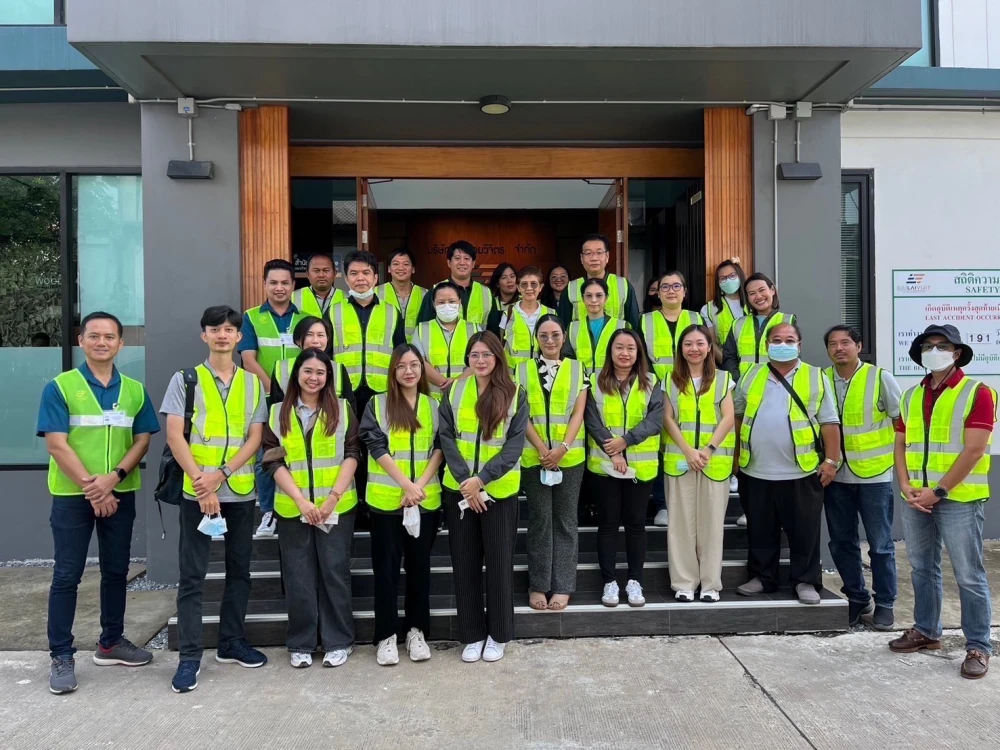
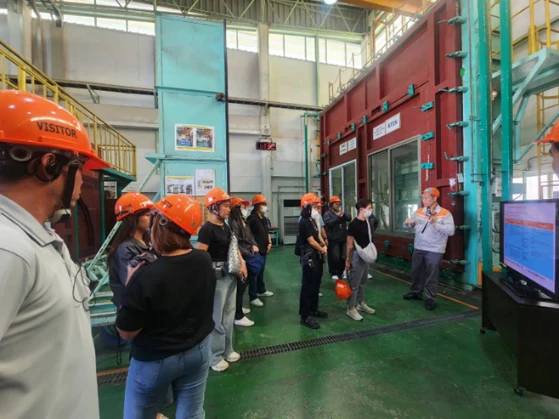
However, the Company conducted site visits to 7 critical tier-1 suppliers to build trust, strengthen business relationships, and verify that production or service standards comply with agreements. This helps reduce operational risks, facilitates knowledge exchange for developing new innovations, and expands long-term sustainable business opportunities together.
Building Relationships and Developing Supplier and Contractor Potential
Developing a sustainable supply chain with operations that comply with international standards or various regulations requires knowledge. Supplier understanding and engagement are very important, especially for material suppliers, equipment that supplies key raw materials in the construction process. Therefore, the Company focuses on raising supplier awareness for responsible business operations, providing knowledge on quality development, as well as practices consistent with human rights principles and new regulatory changes, both domestic and international, affecting the real estate development business.
The Company has a process of selecting key issues that suppliers and contractors are interested in and that impact them in terms of economy, health and safety, and the environment. These issues are then used to organize training sessions for suppliers and contractors.