Project “Construction Site Waste Management”
The Company aims to operate sustainably, prioritizing the environment and striving to be a low-carbon organization. It drives construction waste management by developing innovations to reduce construction waste and manage construction debris to maximize its value and utility.
1. Waste management in the construction process
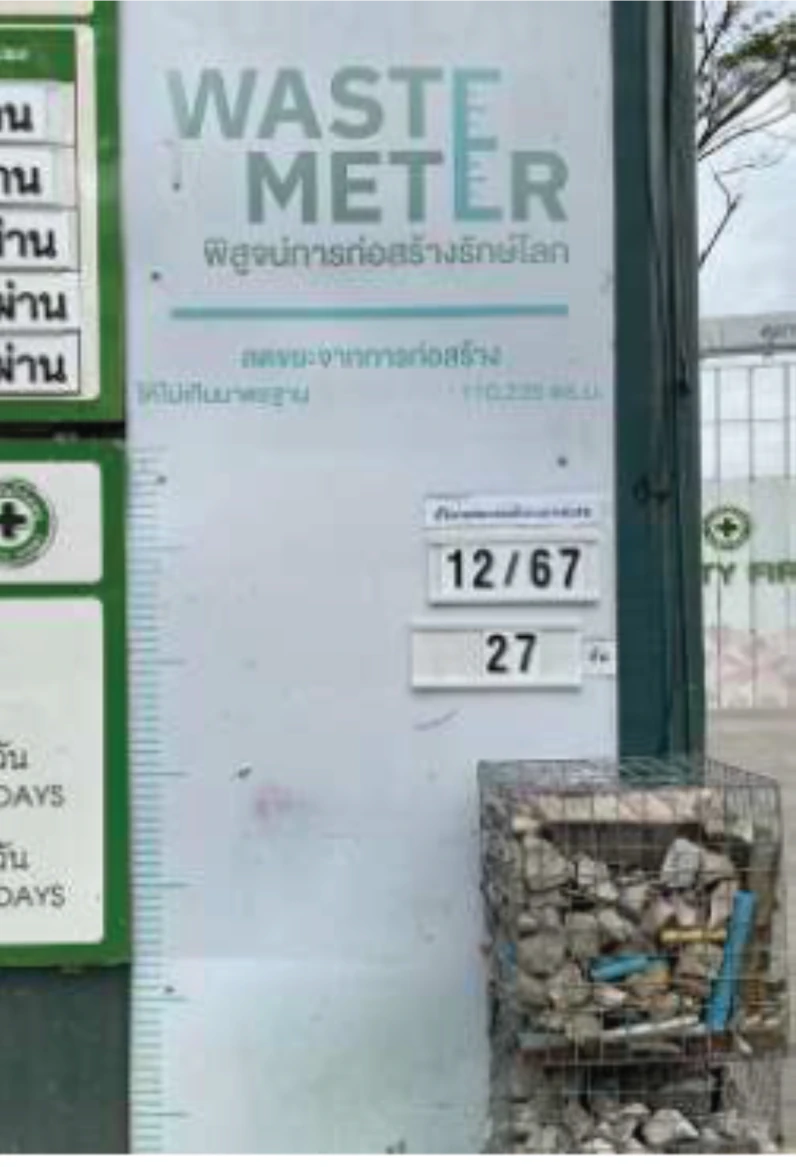
Implemented the Supalai Waste Meter to measure the amount of waste at construction sites, enabling effective monitoring and management of construction waste. In 2024, it was first used at the Supalai Park Ekkamai–Phatthanakan project, which had been under construction for over 14 months, resulting in only 27 tons of construction debris removed from the site.
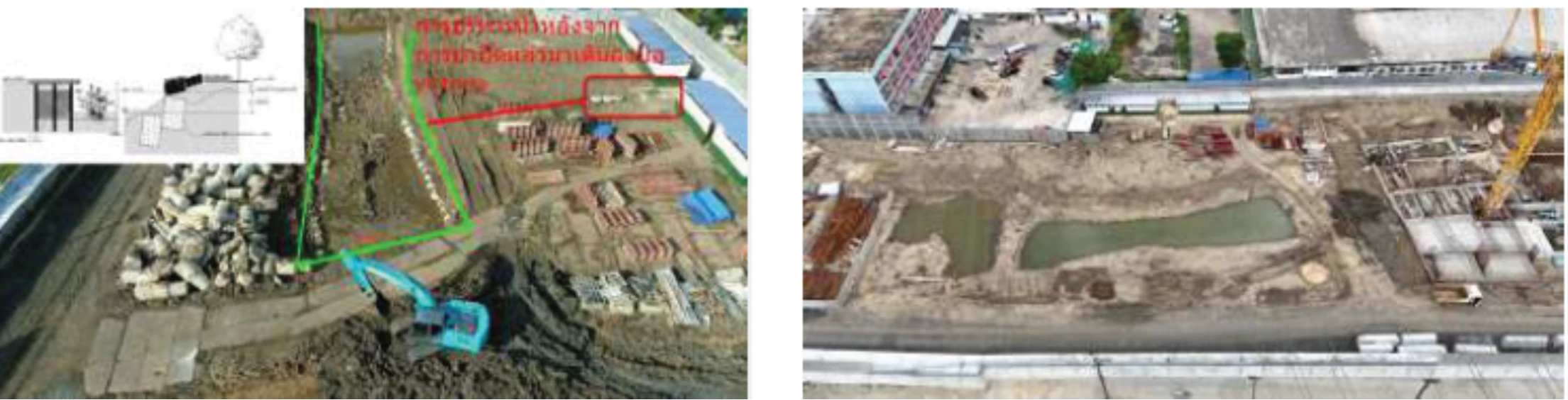
Reuse of pile cut-offs as retaining walls: The pile cut-offs were repurposed within the project to replace the construction of retaining walls around Victoria Pond, instead of being removed off-site, achieving a 100% reduction in leftover construction debris from bored piles.
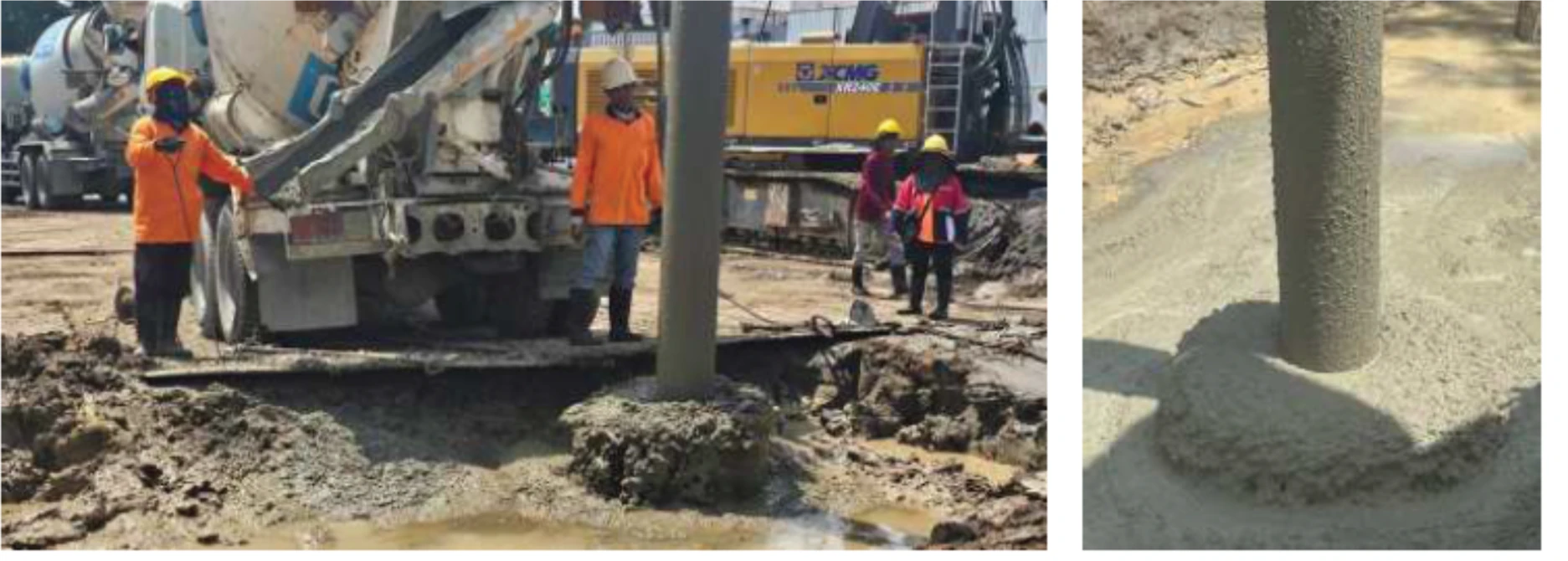
Utilization of concrete discharged from casings during bored pile casting: The concrete sludge from the bored pile process is repurposed and compacted as a subbase layer for roads within the project.
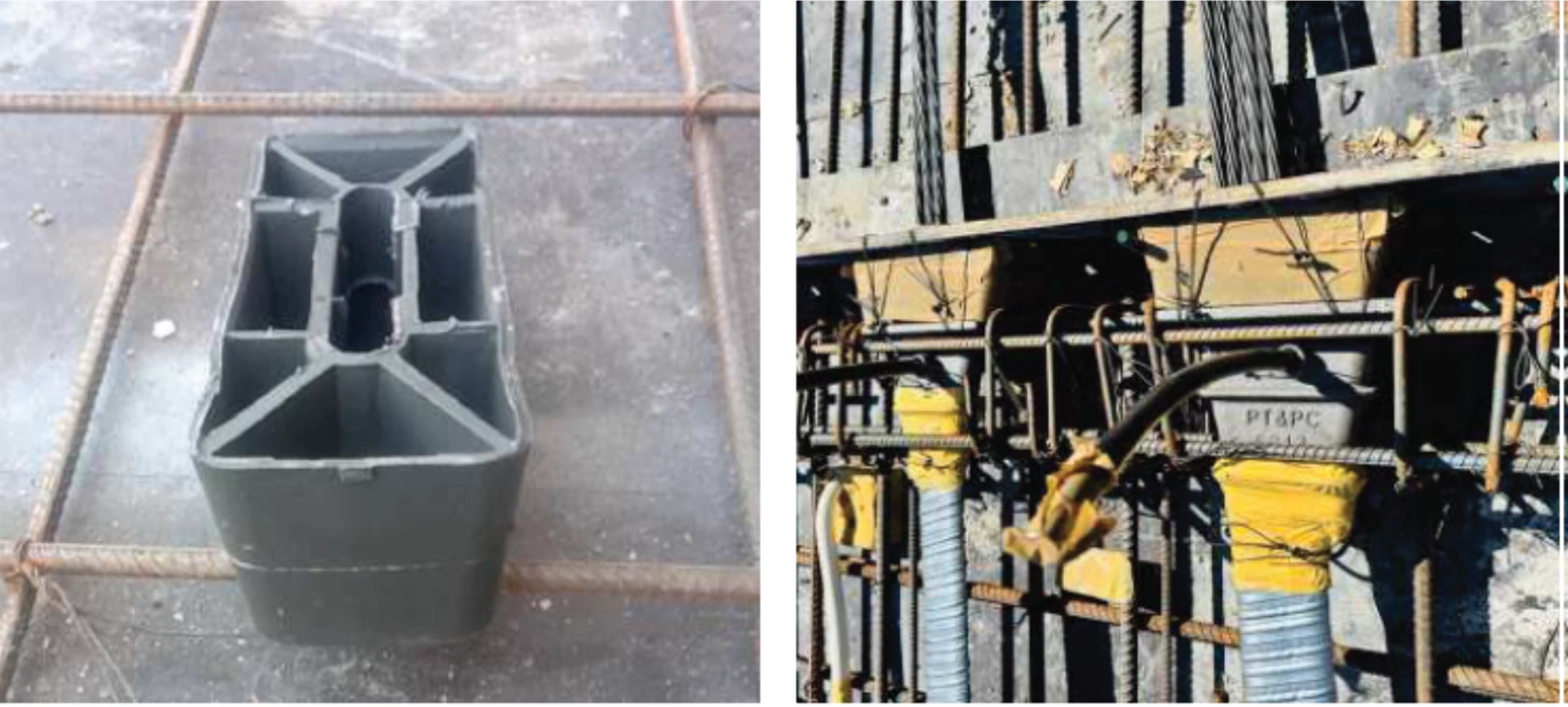
Replacing anchorage plug materials in the Post-Tension System: Change from foam plugs to reusable PVC plugs.
Using plastic pallets, which are reusable, instead of single-use wooden pallets.
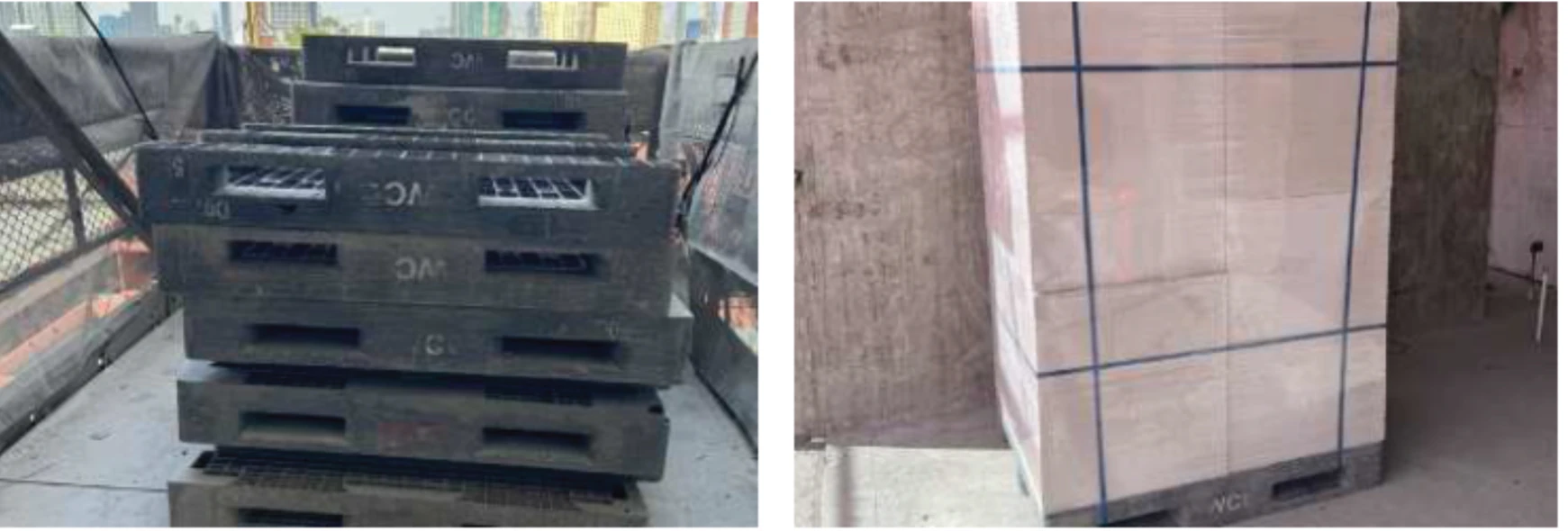
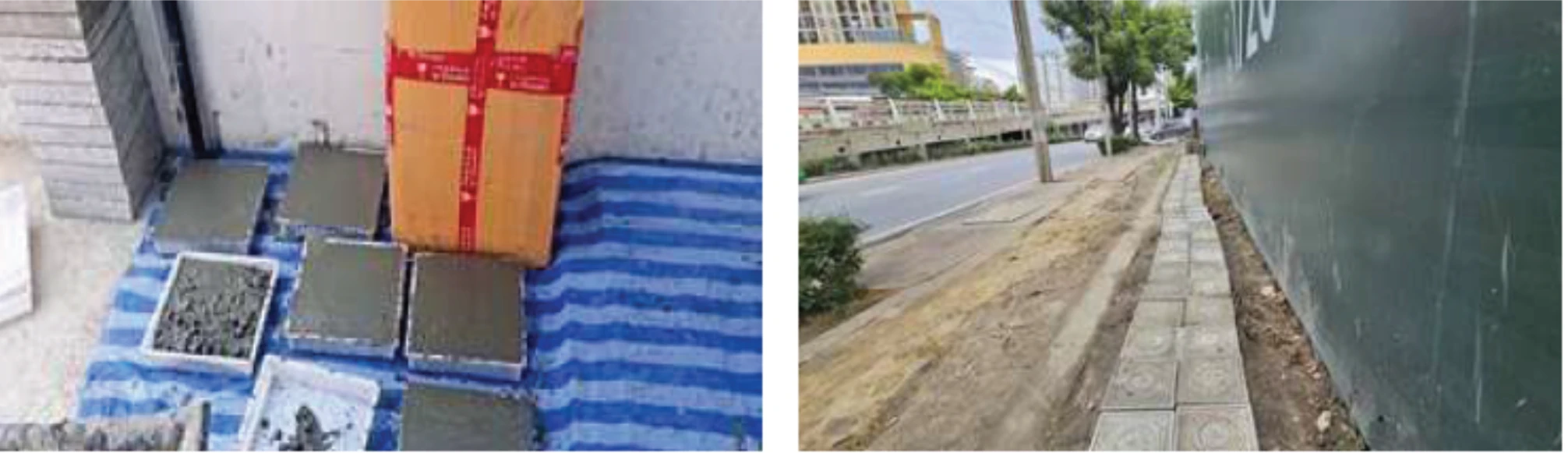
Reusing excess concrete from compressive strength test samples by processing it into useful products, such as walkway slabs.
2. Collaborate with construction partners to minimize construction material waste and maximize the value and usefulness of construction debris
The 4-way fitting helps reduce the number of bathrooms drain pipe connections, replacing two sets of 3-way fittings with just one 4-way fitting.
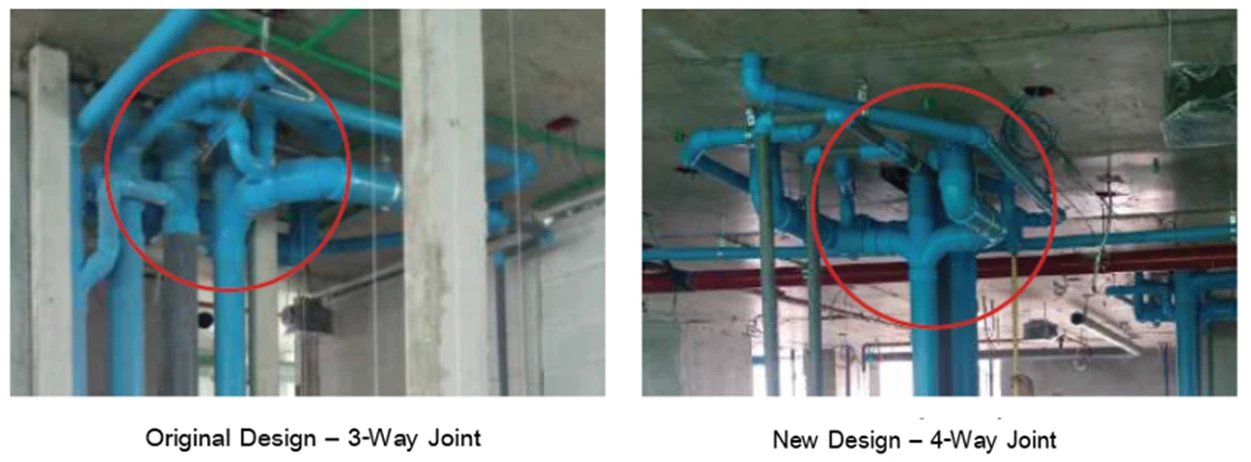
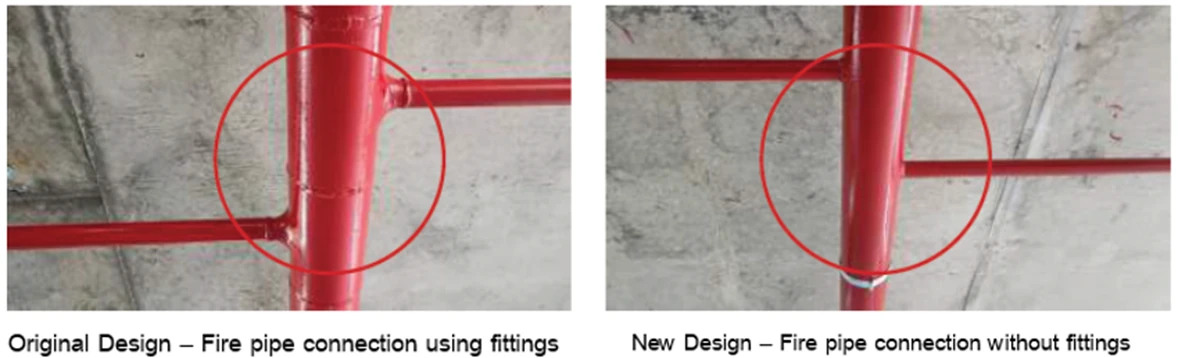
Installing fire sprinkler pipes (steel pipes) without joints to reduce the number of pipe connections, which require high energy to manufacture.
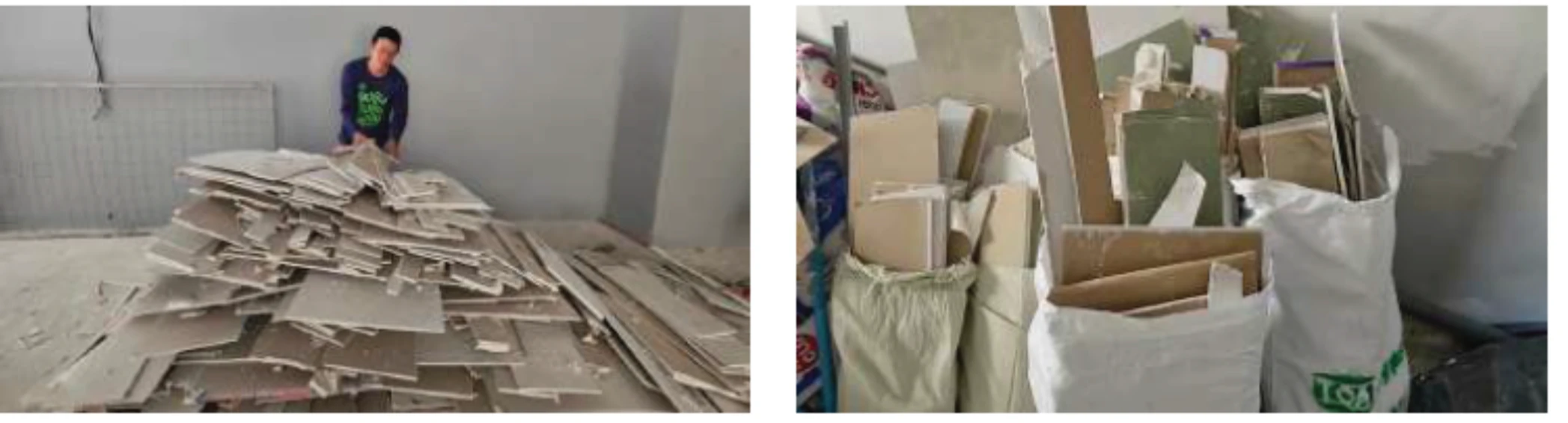
Selecting ceiling panels that fit the space precisely to minimize leftover scraps, while any unusable scraps are recycled and reused at the same standard quality to reduce resource waste.
3. Using prefabricated components in construction
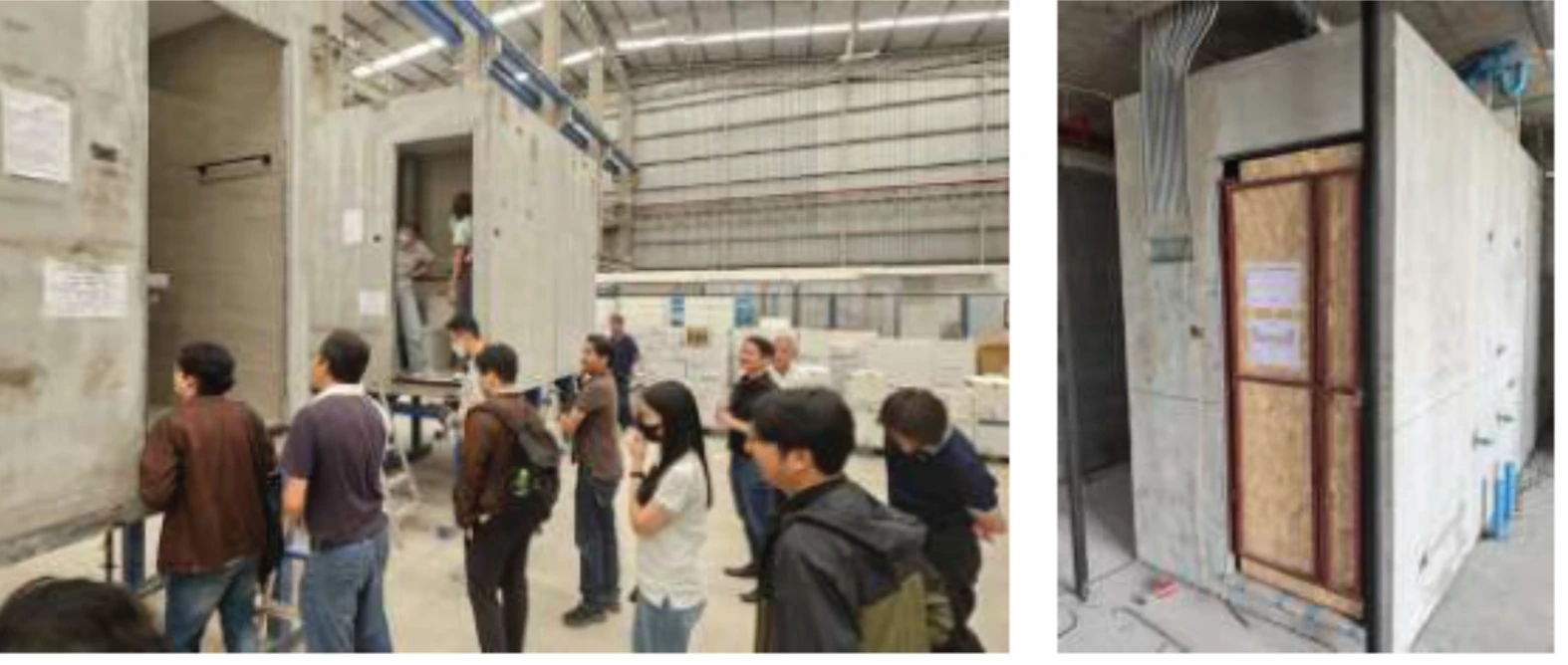
Prefabricated bathrooms are constructed by assembling the entire bathroom in a factory and transporting it to the construction site for installation. This reduces labor usage, allows for quick installation, and minimizes impact on surrounding areas.
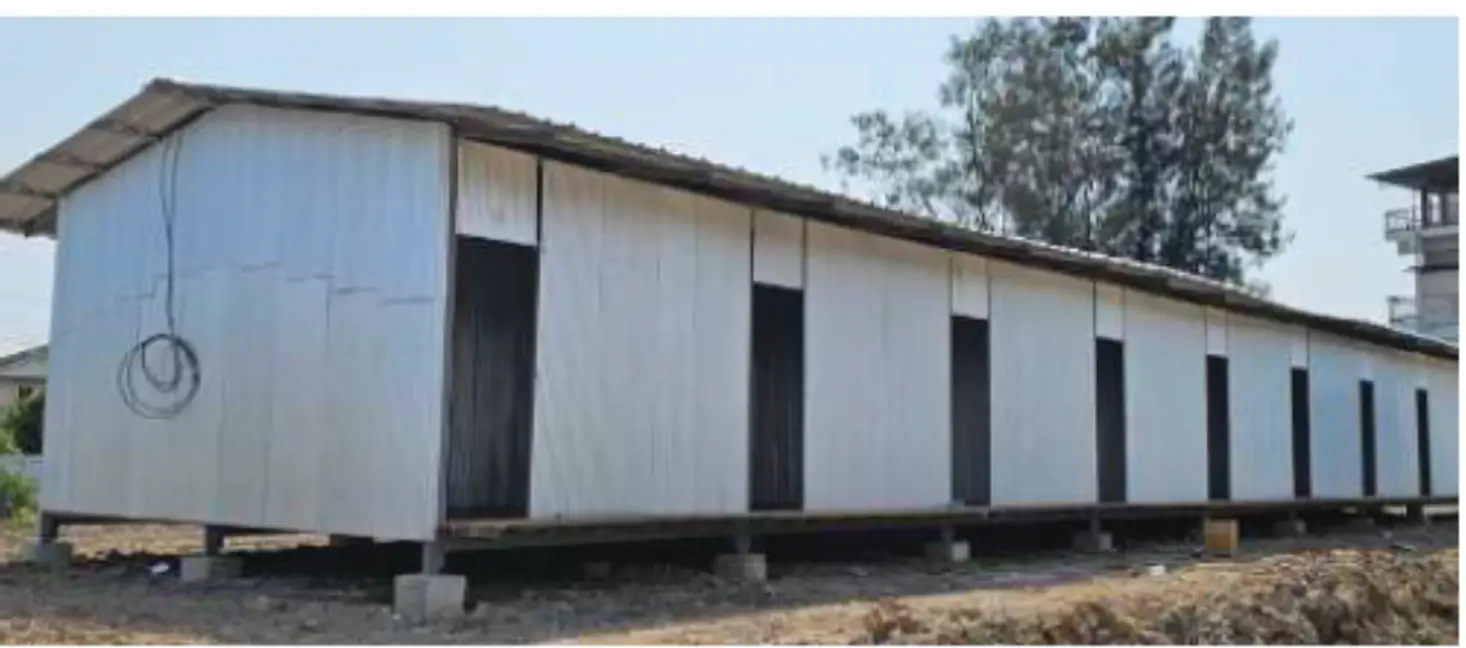
Worker accommodation camps are constructed using the knock-down method, allowing for quick installation, easy disassembly and reassembly, and relocation to the next project. This enables reuse and reduces construction waste.
4. Waste separation measures within construction sites and worker accommodation camps
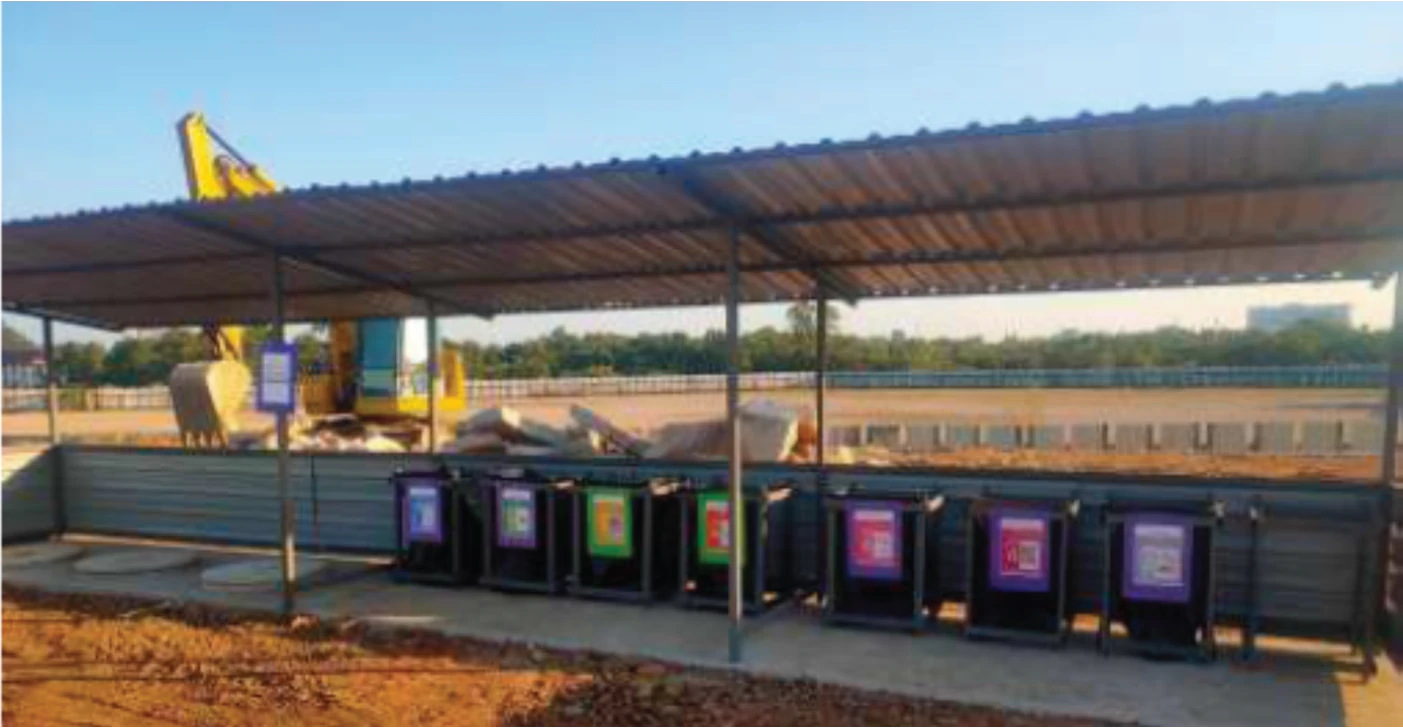
Place 8-color, 8-type waste bins to systematically separate and manage waste easily, including wet waste, plastics, glass bottles, foam, paper, cans, plastic bottle caps, and food scraps. In 2024, waste separation bins were installed at 70 projects. In the future, the Company also focuses on separating hazardous waste from non-hazardous waste to ensure proper disposal and measurable results.
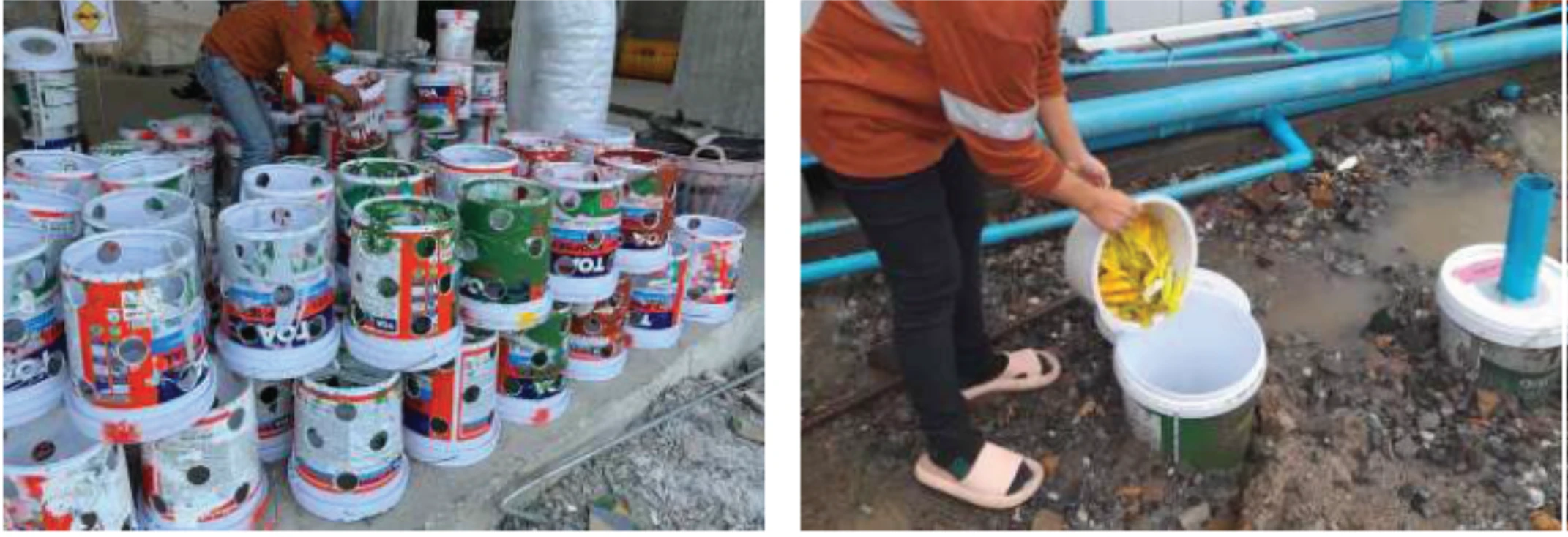
Manage leftover food waste by composting it into soil conditioners, reducing the amount of organic waste without sending it off-site. Food scraps are composted in food-waste bins made from used project bins. This process not only reduces waste and repurposes materials but also produces soil-improving substances.
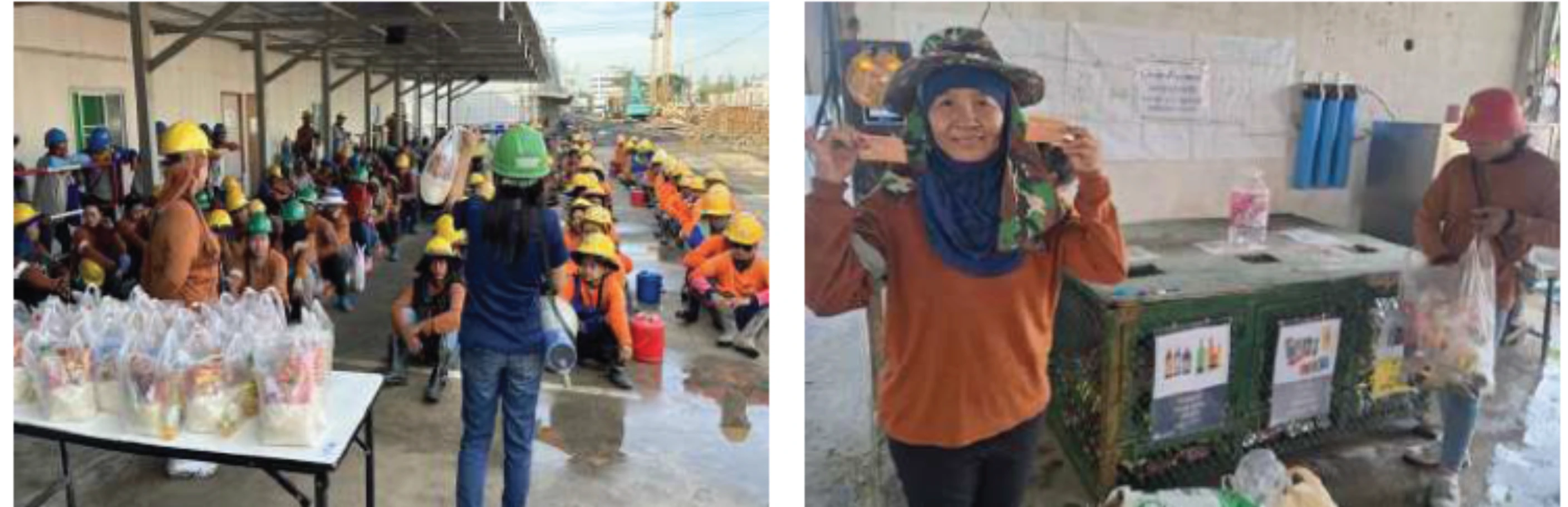
The Waste Bank project manages construction site waste by allowing workers to bring recyclable materials—such as glass bottles, plastic bottles, cans, and paper—in exchange for points. These points can then be redeemed for daily necessities, such as instant noodles, canned fish, cooking oil, and rice.