Activities for Efficient Greenhouse Gas (FTSE: ECC05, ECC15) / (GRI 102-9)
The company recognizes that the real estate business plays a crucial role in contributing to the reduction of global greenhouse gas emissions. Therefore, it has established operational guidelines to address climate change, elevating climate change management as one of the core pillars of its sustainable business strategy. The adaptation processes to climate change are as follows:
Reduction of direct and indirect greenhouse gas emissions from energy consumption (FTSE: ESC31)
1.1 Transition to clean energy vehicles
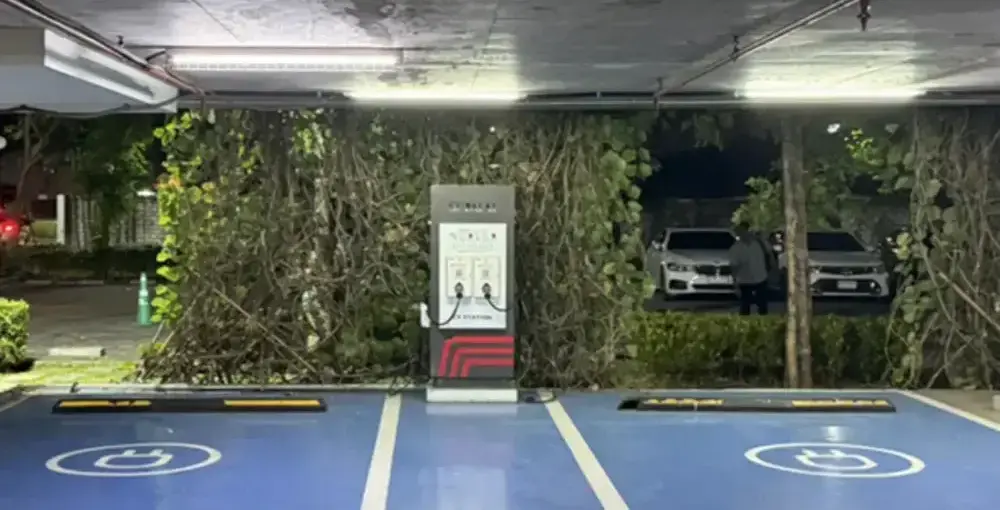
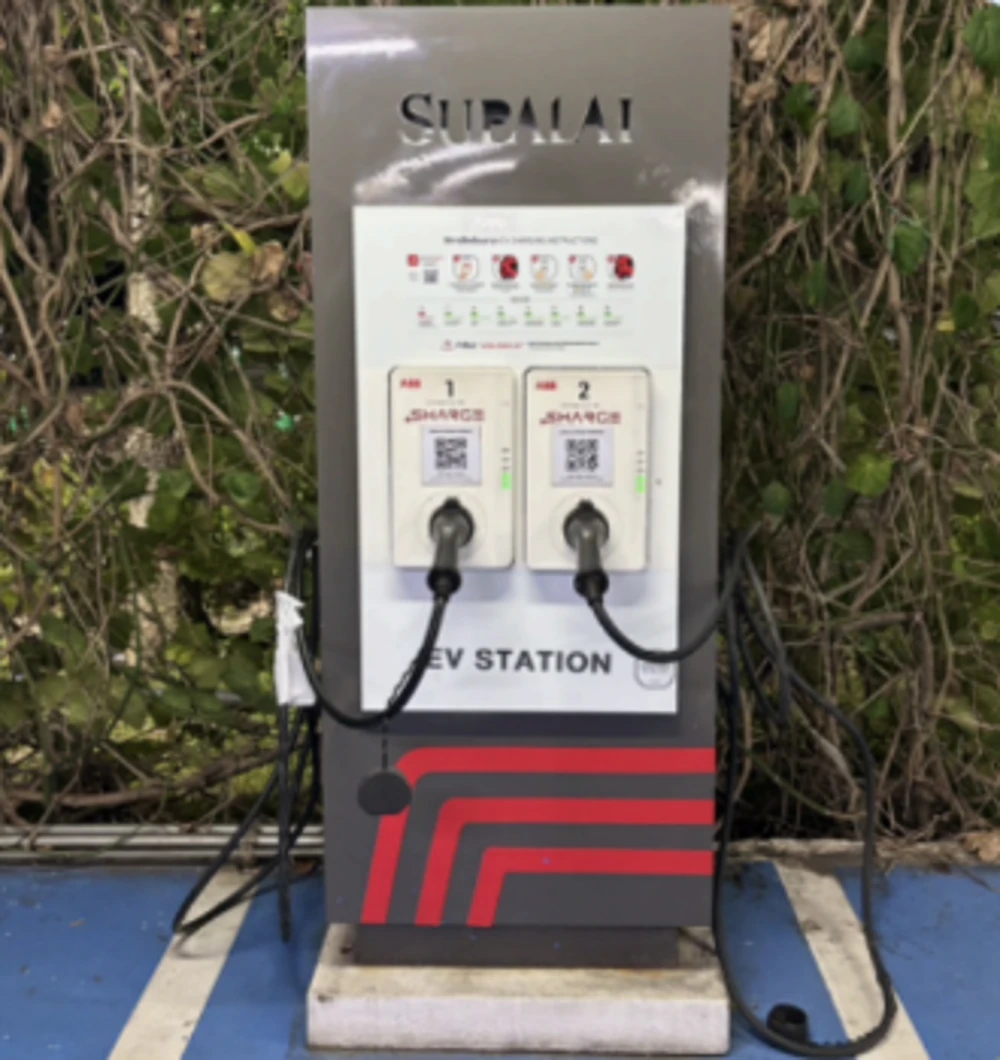
The company has a policy to procure 100% Battery Electric Vehicles (BEV), which have zero tailpipe emissions during operation, and Hybrid Electric Vehicles (HEV), which significantly improve fuel efficiency and reduce carbon dioxide emissions compared to conventional fuel vehicles. This transition to clean energy vehicles reflects efficient resource management in line with Environmental, Social, and Governance (ESG) frameworks, aiming to reduce the organization's carbon footprint across the entire operational chain, from central operations to project level. In 2025, the company allocated a total of 15 alternative energy vehicles into its operational system, divided into: 4 electric vehicles and 4 hybrid vehicles for head office, and 3 electric vehicles and 4 hybrid vehicles for project operations. This resulted in a reduction of 91.33 tCO2eq greenhouse gases and a reduction in fuel energy costs of 49,000 baht.
1.2 Energy Management of Supalai Grand Tower Building to reduce greenhouse gas emissions.
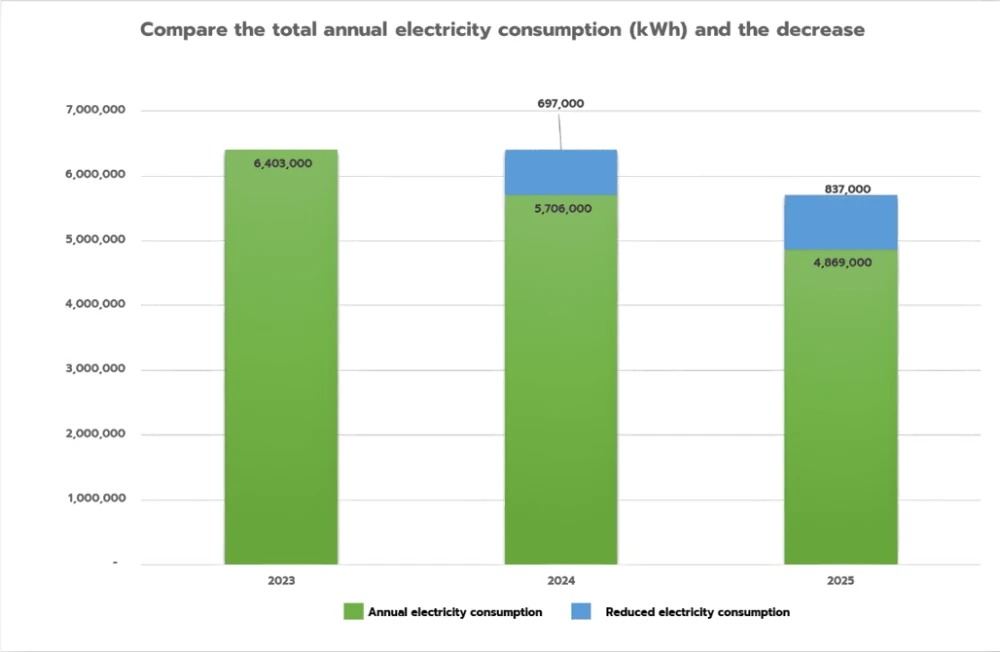
In 2025, electricity consumption was reduced by 873,000 kWh/sq.m. and percent reduction in greenhouse gas emissions 436.5 tCO2eq from the following operations:
- Install Lift Regenerative Drive System, an energy-saving technology that converts kinetic energy from elevator movement during braking e.g., descending with a heavy load or ascending with a light load into electrical energy, which is then fed back into the building's power supply system instead of being dissipated as heat, saving approximately 20-75% of energy. When the elevator moves down with a heavy load or up with a light load (light car weight than counterweights) the motor acts as a generator The inverter or Regenerative Drive unit receives the generated alternating current, converts it to direct current (DC), and then converts it back to stable alternating current to feed back into the building's electrical system.
- Improve the Chiller system by installing Chiller Plant System Management (CPMS) equipment, which is a system used to control and manage the cooling system to monitor the real-time status of various equipment such as temperature, pumps, cooling towers, and Chiller operation, controlling the on-off of equipment to suit the usage load for analysis and improvement of operation to minimize energy consumption, which can help reduce energy costs.
- Replace LED lights in common corridors and adjust the lighting system to operate from 10:00 PM to 6:00 AM to help reduce electricity consumption by 1,191,035 units.
| Year | Electricity consumption (kWh) | Electricity consumption (MWh) |
|---|---|---|
| 2023 | 6,403,000 | 6,403 |
| 2024 | 5,706,000 | 5,706 |
| 2025 | 4,869,000 | 4,869 |
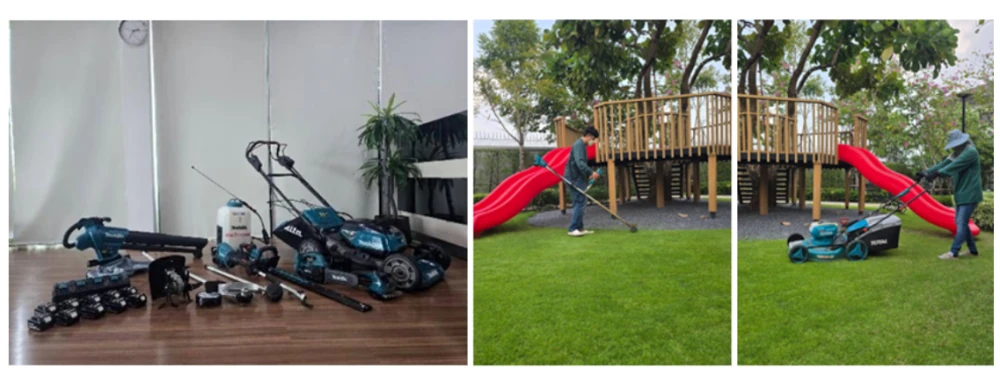
1.3 Convert gardening equipment and tools to those using alternative and renewable energy. By using solar energy through the Solar Cell system installed in the project, reducing reliance on fossil fuels from traditional energy sources, reducing pollution, and long-term environmental impact.
| Year | Fuel consumption for gardening tools (liters) |
|---|---|
| 2024 | 16,117.208 |
| 2025 | 14,054.61 |
1.4 Campaign activities and cooperation with employees to save electricity in the office.
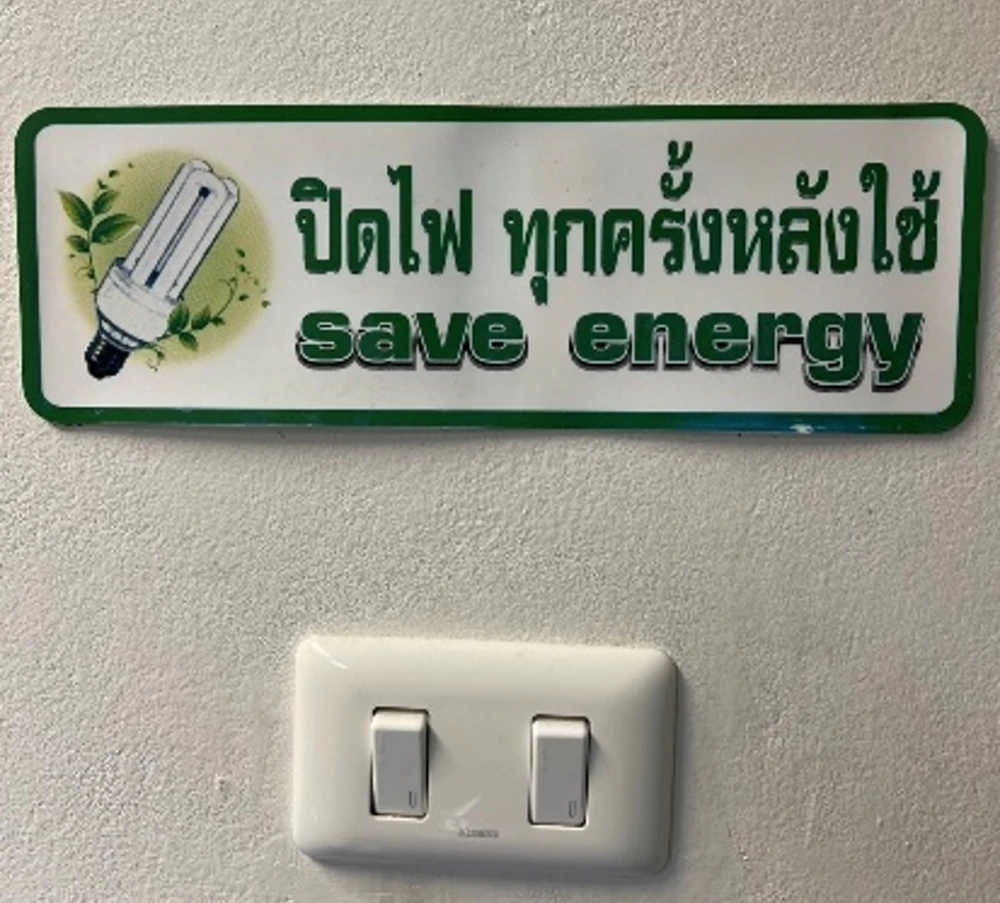
- Campaign to turn off lights and electrical appliances when not in use: encourage employees to turn off lights, computers, photocopiers, and office equipment every time after use or before leaving meeting rooms.
- Adjust air conditioner temperature appropriately: set office air conditioner temperature to an appropriate level, such as 25–26 degrees Celsius, and communicate to employees the impact on energy reduction.
- Maximize natural light by encouraging opening curtains or arranging workspaces to receive natural light during the day, to reduce electricity consumption for lighting.
- Communicate and post energy-saving warning signs, stickers, or campaign posters near light switches, elevators, and electrical appliances to encourage daily employee participation.
1.5 Internal carbon offset activities
- Reduce greenhouse gases, support waste separation, and produce 97,400 employee uniforms from recycled plastic, reducing carbon by 9.74 tCO2eq and reduce energy from ironing/year, which helps reduce carbon by 25.27 tCO2eq Total carbon reduced 35.01 tCO2eq equivalent which is equivalent to planting 3,640 trees.
- Transforming leftover lightweight brick scraps into "fragrant stones" generates supplementary income for local communities (Amphan Community Enterprise, Mae Sot District, Tak Province) and reduces carbon dioxide emissions equivalent to 0.002 kgCO2eq /piece

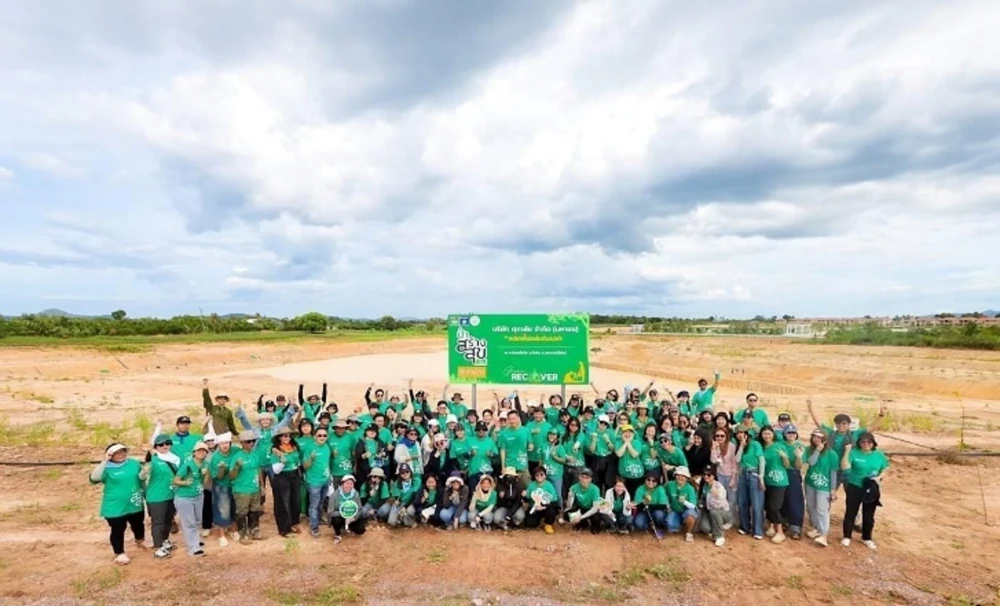
- Forest planting and ecosystem restoration project: "Forest for Happiness" activity for the 3rd consecutive year, where Supalai employees jointly planted 6,650 trees on company land, totaling 55 rai (approximately 8.8 hectares). This is expected to reduce greenhouse gas emissions by 665 tCO2eq within 10 years. This year's project focuses on planting Thai economic tree species that provide shade and long-term benefits, including Yang Na, Payung, Phayom, and Mahogany, all of which are fast-growing trees with efficient carbon dioxide absorption potential.
1.6 The company is a member in the Thailand Carbon Neutral Network (TCNN) Under the operation of the Thailand Greenhouse Gas Management Organization (Public Organization), as 1 of 854 pioneering organizations in greenhouse gas management, to demonstrate its intention and commitment to managing and reducing greenhouse gas emissions. Participation in this network promotes the exchange of knowledge, best practices, and carbon-neutral operational guidelines with public and private sector agencies, as well as supporting the organization in developing effective approaches to reduce and offset greenhouse gas emissions, in line with climate change mitigation goals and sustainable development. The company has joined the Thailand Carbon Neutral Network of the Thailand Greenhouse Gas Management Organization (Public Organization) or TGO. (FTSE: ECC03, ECC73, ECC74, ESC12)